Uncategorized

Module 13: Final Learning Log Summation

What did I notice?
When I was younger, I dreamed about being a librarian. The old school, quintessential “shushing” librarian. I would be surrounded by books all day, everyday. Books. Books. Books. Like most dreams, they are just idealized version of a wanted reality, and, like most dreams, they tend to get obliterated by reality. For those librarians cannot live in today’s world. Today, librarians are asked to be so much more. A paramedic. A tech specialist. A collaborating, advocating and networking guru. A community organizer. A fundraiser. A mentor. A teacher. With so many job descriptions rolled into one, it’s no wonder why teacher-librarians seem to be doing 1000 things at once. Their job demands involvement and defies indifference. A noble profession it is, but also taxing. This leads me to my biggest take-away from this course: teacher-librarians are superheroes and need more support now than ever.
My dream, however, of being a librarian doesn’t seem to want to merge with what a teacher librarian is at the moment. I may not be prepared to be one. After watching the following video, I realized that a learning commons or a library becomes so integral, so engrained in the school community or the community that the responsibility that evolves from that position is positively daunting.
I do not want to be responsible for saving someone’s life by giving Naloxone. If I wanted to do that, I would have become a paramedic. The mere idea of it sends panic through my veins. Then again, not having the ability to do that also send me into a state of fear because I don’t think I could standby and feel that sort of helplessness and powerlessness if I could have gained the skills to help. The weight of that situation is almost too much.
There truly is this ever-pressing weight on Teacher-librarians to be so many things all at once. Last year, I interviewed a TL for an assignment. He described all the different jobs he did in a day: librarian, teacher, tech guru, literacy specialist, robotics innovator and so on and so on. It was endless. I had to ask how he managed to do all that without being overwhelmed? He just smiled and said, “I’ll let you know when that happens.” While I do love the idea of a Learning Commons all my own, I don’t want to spend my entire career being overwhelmed, or having to be a superhero. The only way to alleviate some of that weight would be through advocacy. Teacher-Librarians need help. They need a support staff and support of the school and community to be all the things they need to be to meet the needs of the students. I can see the fear in the TL’s in my district. The fear that their job will always be the first to go and that’s why they feel pressure to be all those jobs at once. If they don’t make themselves indispensable then they are dispensed. That’s why it is so important for TL’s, teachers, administration and students to advocate with and for TL and the Learning commons. Without a well staffed and supported space, it is left to TL’s to be superheroes. And that isn’t fair. I’ve seen the movie. It took a whole team to bean Thanos. Teacher Librarians need a team of superheroes to beat their proverbial “Thanos” as well.
What connections have I made?

some points inspired by Oberg, and Hales & Beaudry’s articles
All the modules became connected with the thread of advocacy. If a Teacher-Librarian’s role is multifaceted, then so is the Learning Commons. Everything is interconnected because in many respects, an LC is a community where all who are a part of it and use it become connected. For an LC to thrive, it has to have all the components in the checklist, but there is one part of the connective tissue that really struck a cord with me. It involves the big three literacies:

Photo by Pixabay on Pexels.com
And how these literacies are fundamentally changing and rebranding what a librarian does and how the Learning Commons is being used. It’s safe to say that I support silent reading and literacy overall. What this course allowed me to do was really expand my knowledge of other literacies. Digital literacy and learning to use web tools such as Padlet, Canva, PowToon and Symbaloo, really enabled me to push pass my tech fear. I’m no a luddite, but I don’t gravitate towards learning web tools because my district has such limited access to computer labs within schools. The chances of using those web tools is limited. However, I’m thrilled that not only did I learn how to use them, but I was able to see how other teachers and people who have take this course have used them in a variety of ways. It’s very inspiring.
Media literacy and Critical literacy are so important, now more than ever. I truly believe that it should be mandatory that students take a course in Media literacy so they can learn how to navigate the social networks and the online world. More importantly, how to apply critical thinking to what they see and read online and being able to decipher if it is real, fake, a lie, a con, or whatever else this current news climate is spewing out at the moment. Its this trifecta of literacy that needs to be encouraged, advocated and promoted in the schools more and more so student have a chance at not only fulfilling the ADST curriculum standards set forth in BC, but also so they can be 21st century digital citizens.
How have I interacted with the Literature?
The readings and assignments for this course almost did me in, but I did learned a lot from the learning logs. The discussions were great, but there were plenty to read through and I found I was overwhelmed. No matter how daunting the experience, I try to hang onto the bits and pieces that I can cobble together for my own use. There were a couple of readings that unearthed my desire to question current teaching practices and inquire about new practices. The Inquiry and design module had the greatest impact on me because after reading about makerspaces, Compton’s Storymaking and Hunt’s making bread, I was struck by how much more fun elementary students get to have in relation to high school students. For some reason, Elementary students get to create more. I don’t know why that must be so. My earliest memory from Kindergarten was having rotational learning centres where I crafted paper planes, then moved onto make a play dough masterpiece, and then move onto story time. It was the variety I remember. The choices. Now, I’ve already started making lists for English and history assignments that could benefit from a makerspace approach (The Poetry unit just became far more appealing) and multi-modal learning opportunities.
I enjoyed interacting with Dr. Krashen’s videos immensely. He is an amazing public speaker and I find that his speeches and videos resonated the most with me. From Module 3 & 12, it was such a great moment for me because everything came full circle in this course regarding sustain silent reading. I might get that tattooed somewhere because I believe in it that much. I have seen it being implemented and how much it does, not only for the students, but also for the learning commons. The key to its success is having the students choose the reading materials and making sure they are reading something they find pleasure in something Neil Gaiman also suggests in his article “Why our future depends on libraries, reading and daydreaming.”
 There is nothing worse that a student who struggles with reading is forced to read a book that they don’t like. Most teachers still have a standard required reading they do as a class. This often leaves a lingering sense of uneasiness and distrust with reluctant readers. It becomes a chore equivalent to taking out the trash because mom said so. If required readings are implemented, then give students 10-15 minutes every class to read something they enjoy. There is no downside to this. However, the one aspect I would like to work on as Teacher-Librarian is to collaborate with the teachers to send their reluctant readers down to do a get to know what they would like to read. In my mind, I would become a personal shopper for these students and try to provide them with the support and resources they need to benefit from silent reading.
What? So What? What Now?
What am I going to do with all this course knowledge brimming between my ears? I intend to apply most of it when I can and tuck away the rest for any future employment when am no longer a TTOC. Until that time, I would like to learn more about how to incorporate diversity in book selections, authorship and resources. I’ve been in all the high schools in my district and I have to admit that diversity in fiction books is getting better, but not at the level it should be at. The non-fiction sections definitely need to be revamped with newer material. The First Peoples resources for some of the schools are fairly outdated and some of the images and language used is very stereotypical and doesn’t reflect the inclusive nature of what a Learning Commons should be about. I also want to see more diversity in fiction authors and content on the shelves. I notice a trend in some of the schools where certain groups of privileged students have picked up racist and xenophobic language and ideas regarding immigrants that I would like to combat. As Rudine Sims Bishop mention in the above video, which will never not have an impact on my life, that students need those books for windows and doors to gain empathy in to the lives of others.

made using Canva
What Now? For now I’m actually going to use all those web and design tools I learned about and make use of them for my life as a TTOC. I can definitely use Canva for all my creative incentives, from making bookmarks, posters, all advertisements like banners for websites. Symbaloo and create a web space for myself and all the resources I rely on as a TTOC. Websites I’ve used, online articles, e-resources, images and everything else centred in one place would be perfect. I always dread Octobers because that’s when most of the teachers in my district teach Poetry and Shakespeare. In order to alleviate my dislike for those subjects, I am going to create a Symbaloo with resources I can rely upon to help me out in a pinch. Also, I think I will pass along all these web tools to the TL’s in my district, along with some of the examples on how to utilize them in a classroom or learning commons environment. Another aspect of this course that struck a cord with me is that networking and collaboration are indeed a backbone of success for any TL and Learning Commons. While I don’t have my own and still rather unsure I want one of my own, I do love exploring and building resources and using web tools. I find endless fun in doing so and enjoy the research part just as much as the design part. If I won’t be able to use any of the knowledge I’ve learned in my own classroom or library, then the next best thing would be to share it and hopefully other teachers and teacher librarians will be able to.
Finally, while exhausted, I can say with certainty that I have learned. Each week I used this course to practice sustained silent reading. I used the course articles and materials and would learn from those in the course as well. This course in itself was a collaborative network of teachers and students who shared their ideas and knowledge. No matter how difficult the course. No matter how I do or do not connect with the material, I can leave this course satisfied and count it as another step in my journey as a life-long learner.
References
Canva (n.d.). Retrieved from https://www.canva.com/.
Compton, Michelle Kay, et al. Storymaking: the Maker Movement Approach to Literacy for Early Learners. Redleaf Press, 2018. (ebook)
Digital & Media Literacy. (2014, August 20). Retrieved from http://mediasmarts.ca/digital-media-literacy.
Gaiman, N. (2013, October 15). Why our future depends on libraries, reading and daydreaming. The Guardian. Retrieved from http://www.theguardian.com/books/2013/oct/15/neil-gaiman-future-libraries-reading- daydreaming?CMP=twt_gu
Hales, Anne and Leisbet Beaudry. (October 2018). “Renaissance delayed: supporting early career teacher-librarians in British Columbia.” BCTF. Retrieved from: https://bctf.ca/uploadedFiles/Public/Publications/ResearchReports/RenaissanceDelayed/20 18%20Renaissance%20Delayed-Research%20Report.pdf
Hunt, Christopher. (July 19, 2019). “#MakeryBakery – bread making and butter making in the library. Retrieved from: https://twitter.com/ExLibrisMrHunt/status/1152304772503896064 (Links to an external site.))
Krashen, S. (2014, February 16). Dr. Stephen Krashen defends libraries at LAUSD board meeting. Retrieved from: https://youtu.be/JAui0OGfHQY
Krashen, S. (2012, April 5). The power of reading. The COE lecture series. University of Georgia. Retrieved from: https://www.youtube.com/watch?v=DSW7gmvDLag.
Learning First Peoples Classroom Resources. (n.d.). Retrieved from http://www.fnesc.ca/learningfirstpeoples/.
Oberg, D. (2014). Ignoring the evidence: Another decade of decline for school libraries. Education Canada, 54(3). Retrieved from: http://www.cea-ace.ca/education- canada/article/ignoring-evidence-another-decade-decline-school-libraries.
Padlet is the easiest way to create and collaborate in the world. (n.d.). Retrieved from https://padlet.com/.
Powtoon. (n.d.). Retrieved from https://www.powtoon.com/home/?utm_source=LP&utm_medium=internal&utm_campaign=2019-11_black-friday&pa_id=erSJ4UHQwCA.
TED, & Kowalski, C. (n.d.). “The critical role librarians play in the opioid crisis.” Retrieved from https://www.youtube.com/watch?v=1w3NXBXdY5c&feature=emb_logo.
Reading Rockets. (n.d.). Mirrors, windows and sliding doors. Retrieved from https://www.youtube.com/watch?v=_AAu58SNSyc.
Symbaloo – Save bookmarks and favorite websites online. (n.d.). Retrieved from https://www.symbaloo.com/welcome.
Assignment # 3: Pro-D Day Poetry
Using Makerspace, Canva, Book Creator and PowToon to Create Multimodal Design opportunities in your Learning Commons.
For this Pro-D Day presentation, I want to explore some tools that teachers and Teacher-Librarians. A Learning Commons as a space for students to inquire and design in ways that appeal to their learning styles, abilities and interests so they can make personal connections to their work. One way to ensure this happens is to explore inquiry and design using Makerspace and tech tools such as Canva, Book Creator and Powtoon. This document will introduce you to all four and provide specific examples for a Poetry 9 Unit. Each section of this blog will have a brief introduction of Makerspace and tech tools and then move on to discuss Curriculum connections. This document is meant to model the makerspace format by having you explore various tools and learning from mentor texts. These include short videos to pique your interest (Mentor texts) and then there are examples provided for each of them. Take a few moments after each section and explore the tools provided, or wait to do so until the end.
Makerspace
This approach to learning allows students to transform works into different formats and presentations while allowing student multimodal ways to learn new content. It is often linked to an informal style of learning, a DIY approach that has “a physical place where informal, collaborative learning can happen through hands-on creation, using any combination of technology, industrial arts, and fine arts.” (Bowler & Champagne, p. 116). It requires using the Learning Commons or the classroom in such a way that the physical space is adaptable to whatever inquiry is to happen. One of the main benefits Makerspaces provide students is moving them from passive consumption towards active production (Bowler & Champagne, p. 118). Instead of students sitting and taking notes, or just reading from a textbook, students are encouraged to explore, inquire, make mistakes and create something meaningful.
Examples:
- If you are science teacher, this could mean setting up different stations for students to learn different stages of cell growth and then creating an infographic using Canva to share their knowledge and present it to a class.
- If you are a home economics teacher, then you could have different maker stations for different sewing, knitting and stitching project for students to explore and create and then student’s can create an instructional Powtoon to show the process they used.
Specific Example: Poetry 9
Traditionally, the unit would focus on using a poetry booklet as a final product to demonstrate the following:
- Types of poetry (Haiku, Diamante, Free verse, Concrete…)
- Poetic Devices (metaphor, simile, personification, rhyme scheme, alliteration, consonance, assonance)
- Assessment: Rubric or Lists.
Using just a booklet format is not wrong by any means, but it does expose some problems in terms of multimodality. Here are a few limitations that just using a poetry booklet, using paper, hand drawn pictures or printed pictures pose:
- Students who aren’t artistic struggle to draw or find images to represent their work.
- Students put minimal effort in because the traditional format doesn’t appeal to their learning style.
- Using a rubric might not accurately assess what a student has learned and instead focuses on the overall product created.
- The design process doesn’t mean that students are learning complex tasks or applying technology at different stages.
The Poetry booklet does not have to be in the format of a book. Each poem can be represented in a different way, but all have to be placed collectively somewhere (a website, book, display ect…) It can be cohesive with Theme, content or personal interpretation.


Week 1, Part I
In collaboration with the teacher, transform the physical space of the Learning Commons to create Poetry stations to that explore different figures of speech and formats for student to learn from. If space allows, move tables and chairs to create mini poetry stations with different poem formats, pens, paper, pencils, pencil crayons, and various crafting tools like scissors and clue. This can be done a variety of ways. If technology is not available, then utilize white boards or poster paper and have student explore each station that has the information that they need.
While it is great to have blank sheets for them to fill out a poem (for example a blank Diamante poem with lines), it is would be even better to have colour, texture and tactile items that represent the poem or mentor text you are using as an example. Find scraps of fabric or even go and get paint card samples from your local hardware store so students can choose a colour that the poem makes them feel or a colour they feel represents the poem. If you have a Diamante poem about plum moving to its opposite: pit, then have a plum there and a pit. Have colours that represent the mood or theme of the poem. Try to appeal to student’s five senses and get them to connect on a personal level when they try to write poems for themselves.
Week 1 part II
In collaboration with the teacher, the Teacher-Librarian should find printed and non-print examples of all poems being taught and set up spaces for student to explore those formats. Mentor texts can be anything from this Poetry Website or reading Dr. Seuss. Examples using First People’s Poetry and prose should be provided because“…the purpose of using mentor texts in disciplinary writing is to expose students to the genres and writing practices that are situated in particular disciplines. In addition, student get firsthand opportunities to study how authors within those content areas use language to craft their message and how they structure their texts.” (Pytash & Morgan, p 94).
The teacher and the Teacher-Librarian can choose to break the class up into two groups and take one to learn the tech tools and the other to go through each poem. This is a chance for the TL or teacher to make sure students know how to conduct themselves appropriately online, learn about copyright, and how to be global citizens. Having a mini-lesson during this time using resources from Media Smarts would allows students to have the skill to move forward.
Introduce figures of speech and poetry examples through mentor texts and allow students to think critically about the content of their poems and how they connect larger themes, world issues and poetic devices. Students can start creating their own poems. This week is about students inquiry and research process. They are learning about different types of poetry and poetic devices while learning to think critically about the example poems. The Teacher and TL can allow students to explore on their own, or guide students by giving mini-lessons on how to analyze a poem. This can be done using Canva (see below).


Week 2
Students explore different formats to express their poems. Students peer edit poems or get feedback from teacher. This can be done anonymously if students don’t want to share their poems to the class. Technology such as Goggle docs can also be used to share work and edit. However, there is something to be said for using the idea of a poetry lit circle to edit each other’s work and discuss various interpretations. It truly depends on the classroom dynamics.
Week 3
Students create their poetry booklets or poem representations using new technology learned, or using the physical makerspaces to create hands-on poetry booklets or representations of their poems. The Poetry Unit usually takes 2-3 weeks. For the Makerspace approach, 3-4 weeks is probably best, depending how long it takes students to create their poems.
Week 4 Assessment
Rubrics are a good way to evaluate student’s booklets; however, assessment lists are a better approach that focuses on the criteria instead of the content. It is hard to judge students on content when they are to make a personal connection through this process. What is important to them may not be important to you and the emotional impact may not be the same. Students can present and share their poems however it suits them and the content of the poem. Leave presentation options open and discuss with students how they want their work shared. It is important that it is share, though it can be done anonymously if need be.
Using Tech Tools
Canva is a design tool that allows students to create various formats for representing their work. From posters, to banners, to presentations, to infographics, to letters, student can use a variety of formats to design and create their projects or assignments. There are a variety of way students can represent information or inquiry learning. Canva can be used across all curriculum and grade levels. It is easy to use (there is initial trial and error) Watch the introductory video to get a feel for it. It is free, but you will have to pay money to access more options. Student can upload pictures of their own.
Cross curricular opportunities include physical education students can make infographics of exercises, yoga or weight training by using pictures of themselves. History teachers can use Canva to create timelines and interactive presentations.
Specific Poetry 9 Example

In this example, I used a Wordsworth Poem and applied critical thinking and my knowledge of Poetic Devices. In the above image, it is in a poster format. I used different colours to highlight key words and phrases, devices, and rhyme scheme. I the colour black to represent isolation and loneliness (as represented by the theme of the poem) and I added daffodils at the bottom for a literal meaning, but also the flower in the centre of each group is a different colour to represent individuality and being alone in a crowd (theme connection). I was able to personalize this poster to suit my personal needs.

In the image to the left, I used Canva to create vocabulary and phrases that I should look up, and even left a space at the bottom for personal reflection. I can print this, send it as a pdf, or even place it on a website to share. Students can do this with their personal poems and even leave it anonymous when sharing.
Teachers can also use this as a teaching tool, transforming poems into visual representations such as these, and model how to do so with the students.
Take some time to sign up and explore Canva!
Tech Tool: Book Creator
Book Creator is a design tool that students can use to make books online. They can create a cover and the pages turn as the story is read. It can be used to create comics and graphic novels as well. Students have access to images and they can also draw directly on the book. They also can upload images of their own. This can be used for Science classes to represent reports, and the entire class can have a science library all their own. It can be used as an online notebook to keep notes safe and easily assessable for other students as well. English 12 students can publish their stories and share them with the class. Home economics students can create their own cook books.
Specific Example: Poetry 9 Unit
In this example, I made personal connections for my love of cats, fruit, flowers and my overall experience with a fun design. Students will have a variety of options to choose from including comic and graphic novel formats. Free Verse poetry can easily be made into a story, comic or graphic novel. Students can draw, add their own pictures and voice overs, and the end product does flip pages like an actual book. Teachers can also have their own online spaces where all your students work can be in the same library. The possibilities for personal expression are endless.
Take a few moments and visit the Book Creator, sign up (its for free) and explore!
Tech Tool: PowToon
PowToon is a great tool to integrate into a classroom because it allows students to create short cartoon videos or presentation videos. Students can record themselves reading a story or narrate the cartoon. Student across all curriculums can create presentation or present information or provide instructions. Teachers can also use it to make instructional videos if need be.

This example provides an opportunity for students to have a visual representation of their poems. Here I used the same Wordsworth poem. It is animated, so the words of the poem are more interactive and I added a recitation over the poem. While the images are literal, there are opportunities for students to add their own personal interpretations of the poem in a variety of ways. This is also a great way for students who excel in auditory learning and want to narrate their work.
Take some time to sign up and explore PowToon!
Applied Design, Skills & Technology Curriculum Standards

English 9 Language Arts Curriculum
Big Ideas
- Language and story can be a source of creativity and joy.
- Exploring stories and other texts helps us understand ourselves and make connections to others and to the world.
Comprehend and connect (reading, listening, viewing)
- Construct meaningful personal connections between self, text, and world
- Respond to text in personal, creative, and critical ways
- Apply appropriate strategies to comprehend written, oral, and visual texts, guide inquiry, and extend thinking
- Explain how literary elements, techniques, and devices enhance and shape meaning
- Use writing and design processes to plan, develop, and create engaging and meaningful literary and informational texts for a variety of purposes and audiences
- Recognize and appreciate the role of story, narrative, and oral tradition in expressing First Peoples perspectives, values, beliefs, and points of view
Create and communicate (writing, speaking, representing)
- Exchange ideas and viewpoints to build shared understanding and extend thinking
- Use writing and design processes to plan, develop, and create engaging and meaningful literary and informational texts for a variety of purposes and audiences
- Assess and refine texts to improve their clarity, effectiveness, and impact according to purpose, audience, and message
- Use and experiment with oral storytelling processes
- Select and use appropriate features, forms, and genres according to audience, purpose, and message
- Transform ideas and information to create original texts
Transmediation & Multimodal Learning
 Have student to take their poem and put it into a different format. For example, have students take a free verse they made about going on vacation and put it into a comic strip or a graphic novel format. According the Shveta Miller (2019), cartoons and graphic novels invite empathy. It doesn’t matter if the cartoon is simplistic or cartoonish, but the drawing can create empathy and allows the author to distance themselves to allow for interpretation. For example, a happy face for a poem about happiness is more than just a literal interpretation, especially if that particular emoji is current and represents a student’s moment in their life. Also, don’t be afraid to use an existing poem (be mindful of copyright) and have students transform it into any of the following:
- Comics (Book creator has this optional format)
- Graphic Novels (Book Creator has this optional format).
- E-book (Book Creator)
- Journal (Canva, Powtoon, Book Creator)
- Infographic (Canva, see right)
- poster (Canva)
- Act out a poem
- mood board (Canva, Book Creator)
- diorama
- contruct a scene out of lego
- Cartoon/video with voice over (PowToon)
- Create a blog (as I have done for this document)
Makerspace Inclusivity & Diversity
For this makerspace to be successful it has to integrate First Peoples Learning(see bc curriculum standards pdf) and provide a variety of ways students can express their poetry. Fortunately Makerspaces allow for the easy integration of First Peoples Learning because it inherently allows for the following from First Nations Education Steering Committee:
- Learning is holistic, reflexive, reflective, experiential, and relational (focused on connectedness, on reciprocal relationships, and a sense of place).
- Learning is embedded in memory, history, and story.
- Learning involves patience and time.
- Learning requires exploration of one’s identity
Principles-of-Learning First-Peoples poster
It is important to use authentic First Peoples materials. Use First Peoples Poetry and stories, written by authentic authors whenever possible. Also encourage student who want to use oral story telling for their poetry.
Try into include poetry authors from diverse backgrounds from around the world and with Canadian content. Use a variety of mentor texts as well to showcase diverse authors. A great way is to have guest speakers and authors come and read their poetry, or find readings online so students can hear the poem through an authentic voice.
Makerspaces are meant to be safe spaces for students to freely express who they are, their personal stories, their culture and identity. For LGBTQ students Makerspaces are opportunities for students to “…be empowered within makerspaces to create products that establish and communicate their LGBTQ identities.” (Moorefield-Lang, p. 47). Poetry has the power to uproot and expose powerful feelings and emotions. It is important that all students feel they can be who they are and share their work without ridicule. Teachers and Teacher-librarians must work collaboratively to ensure that all students feel safe and heard during this process.
Conclusion & Reflection

By using Makerspace in a high school environment you are creating opportunities for students to connect with the curriculum on a deeper and personal level. Making personal connections and allowing for diversity and different learning abiliities will make any class more cohesive and collaborative. Co-teaching opportunies are layered throughout this process, so it would be up to the TL and teacher how each would divide up the tasks, but no matter the task, TL’s and teachers are there as facilitators and not in the traditional lecture format. Mentor text portions can be done in the classroom prior, so students learn how to analyze a poem together as a class first.
Finally, with the exception of of a few examples for Powtoon and Book Creators, I used Canva for most of the designed images. I chose to present it as a form of a blog so it is easily accessible and open to peer feedback. I feel more comfortable using Canva because of my background in Art and Graphic design. Students will gravitate toward certain tech tools or makerspace stations. While it is important for them to explore varying tools, it is alright if they just settle on one.
Exploring Makerspace and these three tech tools allowed me to explore my own creativity and my learning styles. I am a visual learner, but I’m also tactile. I need to express my knowledge by writing and making something that represents my writing. This process allowed me to make a personal connection to the work by exploring a Poetry 9 unit, one I have always struggle with. I hope to use Makerspace, Canva, Powtoon, and Book Creator in the future and adapt them across all grades and curriculums in high school.
If you haven’t done so yet, please explore all the tech tools and start brainstorming how you would incorporate a Makerspace into your curriculum!
References
Ashley, A. (2017, June 9). Intro to Canva. Retrieved November 10, 2019, from https://www.youtube.com/watch?v=QXXbFM81H-w.
Authentic First Peoples Resources. (n.d.). Retrieved from https://resources.fnesc.ca/.
BC Government. (n.d.). English 9 Language Arts Curriclum. Retrieved from https://curriculum.gov.bc.ca/curriculum/english-language-arts/9.
BC’s New Curriculum. (n.d.). Retrieved from https://curriculum.gov.bc.ca/curriculum/adst/core/introduction.
Book Creator – bring creativity to your classroom. (2019, October 3). Retrieved from https://bookcreator.com/.
Bowler, L., & Champagne, R. (2016). Mindful makers: Question prompts to help guide young peoples’ critical technical practices in maker spaces in libraries, museums, and community-based youth organizations.Links to an external site.Library and Information Science Research, 38(2), 117-124.
Canva. (n.d.). Retrieved from https://www.canva.com/.
Farrell, M. (2017, October 24). 5 Tips for PowToon Videos. Retrieved November 10, 2019, from https://www.youtube.com/watch?v=UqHzDZ3flnc.
First Nations Education Steering Committee (FNESC). (n.d.). Retrieved from http://www.fnesc.ca/.
Gordon, C., Singer, M., Engle, M., Alexander, K., Colderley, C., Yolen, J., … Charnaie. (2019, January 4). 22 Diverse Poetry Picture Books for Kids. Retrieved from https://www.readbrightly.com/diverse-poetry-picture-books-for-kids/.
Indigenous Poets. (n.d.). Retrieved from https://www.poetryinvoice.com/tags/indigenous-poets.
Lagerquist, K. (2016, February 28). What is a Makerspace? . Retrieved November 10, 2019, from https://www.youtube.com/watch?v=UCM83CoBAzE.
Media Smarts: Canada’s Center for Media and Digital Literacy. (n.d.). Retrieved from http://mediasmarts.ca/?gclid=CjwKCAiA_MPuBRB5EiwAHTTvMeOIvjQaWYIKQBXuU5pDtAxD2aF7O2wAXWSXhhrW1U_yfH09SqYwERoCkDcQAvD_BwE.
Moorefield-Lang, H., & Kitzie, V. (2018). Makerspaces for All: Serving Lgbtq Makers in School Libraries.Links to an external site. Knowledge Quest, 47(1), 46–50.
Miller, Shveta. (July 21, 2019). “The surprising benefits of student-created graphic novels.” Cult of Pedagogy. Retrieved from: https://www.cultofpedagogy.com/student-graphic-novels/ (Links to an external site.)
PowToon in the classroom – Getting Started. (2019, August 11). Retrieved from https://www.powtoon.com/blog/working-powtoon-classroom-teachers/?gclid=CjwKCAiA_MPuBRB5EiwAHTTvMeoopnqGxB-BGRx2-xE4Z5fiZqWOO61GDfpbet4nXjJHr3FpJe56RBoCYgYQAvD_BwE#.
Pytash, K. E., & Morgan, D. N. (2014). using mentor texts to teach writing in science and social studies. The Reading Teacher, 68(2), 93-102.
Surrey Teacher Librarian’s Association (BCTLA). (December 17, 2019). “What can collaboration with a teacher-librarian look like?” British Columbia Teacher Librarian’s Association. Retrieved from: https://surreychapterofthebctla.com/2018/12/17/what-can-collaboration-with-a-teacher-librarian-look-like/
Talking Pinata Teaching. (2017, May 20). Book Creator How to Video for the Classroom. Retrieved November 10, 2019, from https://www.youtube.com/watch?v=-AJZSUdx7pU.
Wordsworth, W. (n.d.). I Wandered Lonely as a Cloud by William Wordsworth. Retrieved from https://www.poetryfoundation.org/poems/45521/i-wandered-lonely-as-a-cloud.
Yellow Flower Field. (n.d.). Retrieved from https://www.pexels.com/video/yellow-flower-field-984621/.
LLED 462 Learning Log #1

Learning Log Module 3 Scenario
A grade 10 student comes into the library weary because he has to submit an intended reading list and goals for the year. The teacher is excited about his/her new syllabus and is making attempts to slowly integrate more choice in reading in combination with the required novels assigned. The only novels he has ever finished, reluctantly, have been the ones that were required reading in class. He dislikes reading and the idea of finishing one novel let alone a pre-determined list for the year is overwhelming. He is thinking of dropping the class.
How to Help a Reluctant Reader
For reluctant readers, creating a reading list and goals for the year can be a daunting task, even for some bibliophiles. Since the teacher did not specify novels and is open to integrating more student choice, the literacy needs of the student should be considered the first priority. The first step is to get to know this reluctant reader. Here are some suggestions:
- Use leading questions to glean what his likes, dislikes, hobbies, interests, favourite movies and tv shows are. Is he a gamer? Likes to cook? Football fan? Loves ballet? Don’t turn it into an interview or force the issue.
- Try having a casual chat about what he liked or disliked about the recommended books he was ‘forced’ to read in his previous classes.
- Pull a selection of books from all genres and a few from non-fiction and place them on the table. Get him to read the backs and look at the covers. Have him put them in an “I’m Interested” “Not Interest” and “Maybe” piles. For the “Not Interested” ask him what he didn’t like. For the “Maybe” and “Interested” piles, ask him what made choose those selections.. This is a great way to get to know what genre’s he’s interested as well as topics.
Some other considerations:
- Book length. Staring down all 864 pages of Tolstoy’s Anna Karenina would make anyone back away from a book (myself included). Allow them to browse on their own and get them to pull any reading material that appeals to them and place it on the table and then you can chat about what appealed to him about his choices.One way to do this, as suggested by Kiera Parrot, use the acronym BOOKMATCH to consider selecting a title for a student.
 One resource to use is ORCA books. These are considered fast reads and are a great way to students who are reluctant to read to actually pick a book. They are short (around 100 pages) and usually cover a variety of social issues and subject. They also are available in audio books.
- Now if he is a shy student, it is best to give him space to do the above and not hover. Just say “I’ll come back when you are done sorting and we can go from there. Take your time.” I say this because reluctant readers are kind of like a deer creeping into an open field to graze. They are cautious because they don’t want to get caught, but they still want the opportunity to graze without being noticed. They need to do things in their own time.
Become a Team with a Common Goal
I would have a casual talk with the student’s teacher about what their goals are for this course. I would also talk to past teachers for this student and find out what his strengths and weakness are (maybe involve the school counsellor to see if there are any concerns I should be aware of. If necessary, I could talk to his parents or guardians as well, but I would us this as a last resort. It is important to ascertain whether or not his learning is not being impeded for some reason. “I hate books” can be interpreted as “I feel stupid because I don’t read well.” It’s important to find out what his grades are like (thought this isn’t always the strongest indication).
Turn a Possible Dilemma into an Opportunity

Canvas.com
Take this opportunity to give a talk to classrooms and gain insight in what sort of genres students read most. Make displays that will appeal to all students and highlight some interests that you notice reluctant readers like. Also, have displays with fun fact books that are interesting or weird, and not just fiction books. Reading is reading and some people don’t like reading fiction of any kind. They prefer non-fiction.
Reluctant Readers might be Embarrassed to Read
Sometimes students are embarrassed to read certain books. If this student has been bullied before or is not really able to express himself fully yet, it is best to provide a safe place. According to Paula J. Schwanenflugel & Nancy Flanagan-Knapp in Psychology Today it is important to “let boys choose, and help them find the kind of books and other materials they want to read. While boys may be less likely to read or enjoy the relationship-based fiction so beloved by girls (and female teachers), studies show they often enjoy reading and talking with other boys about non-fiction and fiction related to favorite activities like sports and video games.”
According to Krashen, in his Lecture series “The Power of reading”, he argues the best way to increase literacy rates is to use Free Voluntary Reading (similar to Wild reading). This will garner a higher level of literacy, grammar and vocabulary than any other structured way of learning grammar, vocabulary, or forcing students to read books that they don’t like.
 Reluctant readers are the ones worth fighting for. They’re the kids you know would love a good story because they love stories in other mediums: movies, video games, television. It’s a matter of the right book not falling into their hands quite yet and showing them the world of stories which do speak to them and engage them fully. It’s also being upfront with them about the fact that being a reader doesn’t mean giving up other things that they find enjoyable; it’s simply adding more options to how they spend their time.
Suggestions and Resources
It is my personal belief that any student should be allowed to read anything they want that can be found within the Learning Commons or beyond. While some of these lists are geared towards a specific gender, there is no reason why any student wouldn’t enjoy them. The point is matching the right book or reading material to the student. Also, keep in mind that a reluctant reader may not feel represented in the books available in the Learning Commons. Explore and house books with diverse authors and subject matter instead of relying on what is considered mainstream YA fiction.
Here are some book lists for reluctant readers:
- BookRiot’s 20 Books for Reluctant Readers
- 27 Excellent LGBTQ Young Adult Books
- Indigenous Australian Young Adult Books
- YALSA Quick Picks for Reluctant Readers
- 15 Children’s & YA Books by Indigenous Creators in Canada
- Books that Guys Read
- ThoughtCo’s 10 Best Books to buy for Teen Boys
- Goodreads Best Books for Older Teen Boys
- Getting the Guys to the Shelves

Works Cited
CBC Books. “15 Children’s & YA Books by Indigenous Creators in Canada | CBC Books.” CBCnews, CBC/Radio Canada, 25 June 2019, https://www.cbc.ca/books/15-children-s-ya-books-by-indigenous-creators-in-canada-1.5182981.
“Best Books for Older Teen Boys (297 Books).” Goodreads, Goodreads, https://www.goodreads.com/list/show/7368.Best_Books_for_Older_Teen_Boys.
“Books That Gus Read.” GUYS READ | Books, http://www.guysread.com/books/.
Gaiman, N. (2013, October 15). Why our future depends on libraries, reading an daydreaming. The Guardian. Retrieved from http://www.theguardian.com/books/2013/oct/15/neil-gaiman-future-libraries-reading-daydreaming?CMP=twt_gu (Links to an external site.)
Jensen, Kelly. “20 YA Books for Older Teen Reluctant Readers.” BOOK RIOT, 11 Oct. 2017, https://bookriot.com/2017/10/08/20-ya-books-older-teen-reluctant-readers/.
Kelley, S., & Miller, D. (2013) Reading in the wild: The book whisper’s keys to cultivating lifelong reading habits. San Francisco: Jossey-Bass. p.88-128 (Book Excerpt)
Krashen, S. (2012, April 5). The power of reading. The COE lecture series. University of Georgia. Retrieved from: https://www.youtube.com/watch?v=DSW7gmvDLag (Links to an external site.)
Maclagan, T.A. “27 Excellent LGBT YA Books to Add to Your Reading List.” BookBub, BookBub, 4 June 2019, https://www.bookbub.com/blog/lgbt-ya-books.
“Orca Book Publishers.” Orca, https://www.orcabook.com/Audiobooks-DigitalSubscriptions.aspx.
Palmer, Iva-Marie. “Getting Guys to the Shelves: Great YA Books for Boys.” Brightly, 3 Feb. 2019, https://www.readbrightly.com/young-adult-books-for-boys/.
Parrott, Kiera. (August 28, 2017). Thinking outside the bin: why labeling books by reading level disempowers young readers. Retrieved from: http://www.slj.com/2017/08/feature-articles/thinking-outside-the-bin-why-labeling-books-by-reading-level-disempowers-young-readers/#_ (Links to an external site.)
“Readings.” Indigenous Australian Young Adult Books · Readings.com.au, https://www.readings.com.au/collection/indigenous-australian-young-adult-books.
Schwanenflugel, Paula J., Flanagan-Knapp, Nancy. “What Is It with Boys and Reading?” Psychology Today, Sussex Publishers, https://www.psychologytoday.com/ca/blog/reading-minds/201803/what-is-it-boys-and-reading.
“The 10 Best Books to Buy for Teen Boys in 2019.” ThoughtCo, 12 May 2019, https://www.thoughtco.com/popular-books-for-teen-boys-626718.
YALSA. “2019 Quick Picks for Reluctant Young Adult Readers.” Young Adult Library Services Association (YALSA), 22 Jan. 2019, http://www.ala.org/yalsa/2019-quick-picks-reluctant-young-adult-readers.
LIBE 441: Reflective Bibliography
 I teach in Secondary Schools, so I didn’t know if a Children’s Lit course could offer me anything that I could use. I thought I would be stuck reading picture books. I’m happy to admit I was so very wrong. This bibliography consists of the greatest reflective learning moments I had during this course. First, I took a journey back into my childhood and discovered how childhood itself can be rather hard to define. Second, I slowly peeled away the blinders I had been wearing regarding canon, context, literature and diversity. Then I opened a bunch of sliding doors and entered into worlds I never thought to explore. Finally, I looked to the future where reading aloud isn’t just for children and that authors provide much needed authenticity and narrative, giving their books added context and voice.
Defining Childhood
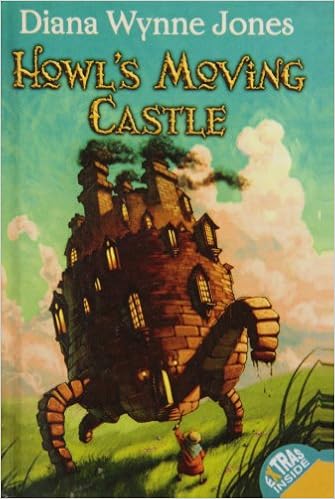
image courtesy of amazon.ca
I view my childhood through a romantic and nostalgic lens: a young, rebellious girl who’d rather run wild amongst trees and have her nose in a book than conform to expectations. I gravitated towards fantastical reads like Howl’s Moving Castle in order to escape my isolation of growing up in a mountainside valley. Books were and still are my escape. Discovering that childhood might be defined by adults, through a historical, cultural and societal lens (Frijhoff, 2012), made me pause. From the outside, this may be true. However, there is something to be said for hearing from authors who really don’t consider themselves writers of children’s books. Rather, they consider themselves writers who write books and some of those books happen to be enjoyed by children. Mourice Sendak is one of those authors who challenges my viewpoint on children’s books, which I always thought were just for children. Now, I realize that is such a narrow viewpoint to hold. What stories have I missed? What characters have remained strangers? What worlds have I not discovered?
As Mourice Sendak so graciously stated, we still hold the same beliefs and fears as we did when we were children, so childhood never really ends. Not really. That notion seeped into my mind and rolled around throughout this entire course. I started to see children’s books as just books. Wonderful books. Funny books. Sad books. Fantastical books. It doesn’t sound too profound, but as a Secondary Teacher, it challenged me to explore books that aren’t a part of literary or classic canon.

Context, Canon and Change
There are long-held thoughts regarding canon, Literature and the YA genre. These thoughts are like wearing blinders: you can see straight ahead, but not next or behind you. The cultural context and who the students are and how they live impacts the way they interact with any text. Relying on the Classics doesn’t create inclusivity, but rather it often creates narrowness and exclusion. Classics tend to focus on Eurocentric canon and dominant cultural narratives. The key is to take those blinders off, step away from traditional forms of storytelling and in doing so, students can find new ways to connect with world around them, without having to rely on literature from the past (Fassbender, 19-23). It’s been a long held standard that teachers use classics to teach literature. Literature is more than that. It has to be.

image courtesy of amazon.ca
Teacher-librarians must question and challenge the definition of Literature itself because it is more than just a list of books everyone ‘has to read’ in order to be considered literary. Literature must create empathy in the reader and provide levels of meaning in new ways that can reach the hearts and minds of the many, and not just few. SF Said believes “that books for young readers have the deepest impact of all. They’re the books that shape us and stay with us forever. Like ancient myths, they deal with the biggest questions: Who are we? Where do we come from? Where do we belong? How should we live?”
Literature can be Graphic Novels, Comics, Young Adult books and Mangas. Literature comes in all forms and formats. I have seen the positive impact Mangas like FairyTail have on students. Reluctant readers who will sign out 20 or more volumes and consume and analyze every single page, gaining empathy and insight through the imagery. All forms and formats have the capacity to use language and pictures to create intricate plots, dynamic characters, whimsical and realistic events and actions, all in intricate ways that mean something to those who read them. Ways that connect and make them consider something they never thought possible.
Connections and Considerations
I’ve connected canon and cultural context with diversity and representation. It’s about asking questions about the context of a book, how the audience will interact with that book from their own personal context, and what the content is actually about. Does it perpetuate negative stereotypes? Long held Eurocentric narratives? Who does it represent and whom is it written for? Who wrote it and why? It is about finding authentic authors who represent their respective cultures?
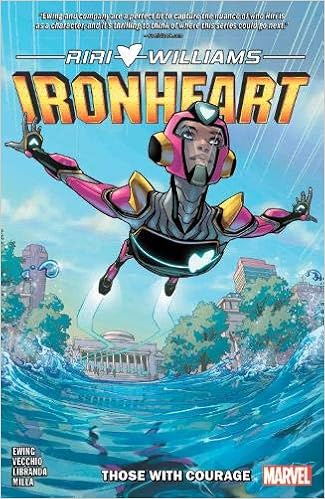
image courtesy of amazon.ca
It isn’t enough to say, “Diverse books are important.” That’s a given. I need to dig deeper and search for books written by diverse authors who represent their culture and experiences. I need to house more Indigenous picture books, children’s books, YA and adult books written by Indigenous authors who can provide authentic voices. Instead of relying on previously recommended books that may house harmful and stereotypical views on said culture, I want to have a variety of diverse selections so students will be able to recognize themselves in the traditional Western Literary Canon (Wilste, 23).
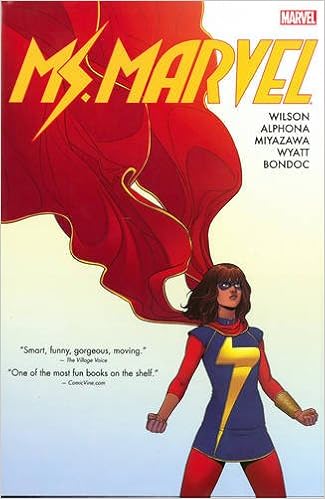
Image courtesy of amazon.ca
One way to do this is to offer lessons that reflect different ways to interact with the content through multimodal responses of learning (Leland et al. 127). Creating opportunities for students to interact with the content in a meaningful way and transform what they have read into something new, whether through dance, art, and fan fiction, to create personal meaning. Diversity has propelled mainstream comics, like Marvel to create diverse characters like Riri Williams in Invincible Ironman: Ironheart and Kamala Khan in Ms. Marvel. As a Teacher-librarian I need to showcase these changes.
This connects with everything Rudine Sims Bishop talks about in her essay, “Mirrors, Windows, and Sliding Glass Doors.” Bishop states that “when children cannot find themselves reflected in the books they read, or when the images they see are distorted, negative, or laughable, they learn a powerful lesson on how they are devalued in the society of which they are a part.” It’s a holistic approach to diversity where those in the dominate culture, who do not have to look too far to find their own reflection in a book, can and will benefit just as much as those who need and deserve equal representation.
Diversity is the Sliding Door Towards Empathy
Bishop’s words are rooted in the very power of what books can be. Books have the greatest capacity to teach its reader empathy. The reason why diverse authors and diverse books are important is because if we only read books that are reflections of ourselves, then we will not learn that there are people who do not live, think, or believe like we do. Representation in books matter not just for those who deserve representation, but for those who already have it and need to learn that the world doesn’t revolve around their narratives and beliefs.
One goal a Teacher-Librarian should hold in high regard is creating a Learning Commons where students feel welcomed, safe and seen. To be truly seen and accepted is one of the truest gifts you can give a student. With each book I have discovered and read, I challenged myself not to see my reflection by making sure each book, comic, graphic novel, Manga is not a reflection of myself. Instead, I need to start viewing all my reading choices as if they are windows and sliding doors. One way to do this is to question my own privilege and beliefs. To challenge them. To learn from them. To read and recommend books that explore immigration, race, sexual identity, gender stereotypes, social constructs, differing cultures, beliefs, mythology, history and backgrounds. There are so many stories out there. The process of eliminating my own blinders has been rather liberating.

Having worked in Secondary Schools, I was always annoyed when the English teacher would leave a lesson plan that would require the TTOC to read aloud to the class. Utter and complete dread spread over my body knowing that I would loose my voice by the end of the day and then I would have to take a day off for it to recover. But this course offered me a chance to challenge my held beliefs. The importance of reading aloud so students can hear the story in a new way and strengthen their own language skills. I always felt it was a sort of punishment, but as a child my mother read to me every night. Where would I be without that? And what if Secondary students never had that chance in their home life or in Elementary School?
Moving forward, I will try to incorporate more Audio Books in my Learning Commons, so students who struggle with reading can have that extra support, and for teachers who aren’t great orators and dramatists can get a bit of a vocal break. Furthermore, it is just as important to connect the book with the author and incorporate their inspiring stories within lessons, to give context and an authentic voice to the story. Hearing Rukhsana Khan read her book The Roses in My Carpet has far more power and impact than if I read it aloud. It is her story to tell and it is important to give her space to tell it.
And Finally….
With the help of #IMWAYR weekly posts, the modules, browsing through my local library, and asking the public Librarians, I discovered books I wouldn’t have considered before and in the process discovered the lives of others, our differences and our similarities. What a gift to have been given every week. I hope to give that back to my future students.
All I could ever ask of a course is to teach me something, to create opportunities for me to learn and to help me grow as a person. The resources listed below did more than that. They will enable me to be a better Teacher-Librarian on a wide path, looking both to the left and right, behind and ahead, with my blinders off.

Bibliography
Articles
Bishop, R. (1990) The Ohio State University. “Mirrors, Windows and Sliding Glass Doors” originally appeared in Perspectives: Choosing and Using Books for the Classroom, vol. 6, no.3, Summer.
Fassbender, W. J., Dulaney, M., Pope, C. A (2013). Graphic narratives and the evolution of the canon: Adapting literature for a new generation. Voices from the Middle, 21(1), 19.
Frijhoff, W. “Historian’s Discovery of Childhood.” Paedagogica HIstorica. 48(1), 11-29. 2012.
Leland, C., Lewison, M., & Harste, J. (2012). Multimodal responses to literature. In Teaching children’s literature: It’s critical. Taylor andFrancis, p. 125-236.
Said, SF. “Can Children’s Books Help Build a Better World?” The Guardian, Guardian News and Media, 29 Sept. 2015, http://www.theguardian.com/childrens-books-site/2015/sep/29/childrens-books-build-a-better-world-sf-said.
“Tech in the Classroom: Audible.com.” Tech in the Classroom: Audible.com | Education World, http://www.educationworld.com/a_tech/tech-in-the-classroom/audible.shtml.
Wiltse, L. (2015). Mirrors and windows: Teaching and research reflections on canadian aboriginal children’s literature. Language and Literacy, 17(2), 22-n/a.
Discovered Books
Adeyemi, Tomi. Children of Blood and Bone. Henry Holt & Co, 2018.
Choi, Yangsook. The Name Jar. Zaner-Bloser, 2013.
Daniel, Danielle. Sometimes I Feel like a Fox. NNELS/VIRN, 2018.
Ewing, Eve. Libranda, Kevin. Ironheart Vol. 1: Those With Courage. Marvel. 23 July 2019.
Johnston, Aviaq, and Tim Mack. What’s My Superpower? Inhabit Media Inc., 2017.
Jordan-Fenton, Christy, et al. When I Was Eight. Annick Press, 2013.
King, Thomas. Eggenshwiler, Byron. Coyote Tales. Groundwood Books, 2017.
Lee, Stacey. Under a Painted Sky. Speak, an Imprint of Penguin Random House LLC, 2016.
Love, Jessica. Julian is a Mermaid. Walker Books Ltd, 2019.
Mashima, Hiro. Fairy Tale. Master’s Edition Vol. 1. Kodansha Comics. 10 November 2015.
O’Leary, Sara, and Qin Leng. A Family Is a Family Is a Family. Groundwood Books, 2018.
Pearlman, Robb. Kaban, Edna. Pink is For Boys. Running Press Kids, 2018.
Rauf, Onjali. The Boy at the Back of the Class. Hachette Children’s, 2018.
Wilson, G. Willow. Ms. Marvel Omnibus. Vol. 1 Marvel. 15 November 2016.
Wynne-Jones, Diana. Howl’s Moving Castle. Greenwillow Books, 2008.
Yang, Kelly. Front Desk. Arthur A. Levine Books, 2019.
Images
All book images are courtesy of amazon.ca.
Videos
Bishop, Rudine S. “Mirrors, Windows and Sliding Doors.” Rockets, Reading. YouTube, YouTube, 30 Jan. 2015, http://www.youtube.com/watch?v=_AAu58SNSyc.
Khan, R. (2018). Rukhsana Khan The Roses in My Carpet, Words Aloud 2007, Canada. YouTube. https://www.youtube.com/watch?v=TXSZdb9pezs.
Sendak, Maurice. “Maurice Sendak on Being a Kid.” Blank, Blank on. YouTube, YouTube, 10 June 2013, http://www.youtube.com/watch?v=KvtgqJTVVhE.
Talks, TEDx. “Can A Children’s Book Change the World? | Linda Sue Park | TEDxBeaconStreet.” YouTube, YouTube, 2 Dec. 2015, http://www.youtube.com/watch?time_continue=3&v=40xz0afCjnM.
Websites
“You’re Getting a Free Audiobook.” Audible.com, http://www.audible.ca/.
LIBE 477 Final Vision Project
Final Vision Project: A Cross-Curricular Coding Journey

For my Final Vision Project, I explored cross-curricular coding. I wanted to integrate coding into the B.C. curriculum, demonstrate why coding is an important skill to have, and why Computer Science is important to explore within the classroom. I chose grade 8 because in my district most of the Computer Science courses are for grades 11 and 12. As an English teacher, I have always wanted to branch out and discover new ways to tell a story. As a life-long learner, I have always wanted to explore coding. I find it fascinating. In many ways it is similar to learning a new language, in others, it is a series of puzzles that when put together in such a way something new happens. That’s exciting! I wanted to take that excitement and turn it into something.
After reading Will Richardson’s Why School?: How Education Must Change When Learning and Information Are Everywhere, I realized that my excitement could be channelled into a bridge between traditional schools and digital learning. Richardson’s question of why school? propelled me to finding an answer to that question. Why school? Well, because school can still be relevant if schools become agents for change.
Vision & Purpose

WordArt.com
I approached my Final Vision Project with the idea that to learn coding, one doesn’t need a classroom, only the will and time to do so. I had this lingering feeling that maybe if teachers could learn new skills separate from their subject area and tap into the changing digital and technological world, then a bridge could be formed between the now and the future, between teacher and student. I had to pause, talk to teachers in my district, and reflect on the fact that apprehension towards coding due to time constraints were real.
So how could I get teachers interested in trying coding in their English 8 classes? I tossed around a few ideas: a presentation, an infographic, even step-by-step video, but ultimately, a website that teachers in my district could use get an introduction to coding created the best option. The content of the website gave me fits and starts. At first I was doing too much, jumping far too down the line. I had pages of coding language with descriptions and pictures. I deleted all of that and focused. What was my purpose? To get teachers interested in coding in an English 8 Class. I focused on storytelling because that is a fundamental part of the B.C. 8 Curriculum and telling a story is universal.
Rationale & Artifact
My rationale behind the artifact was to make things easy for teachers. They are so busy and if I provided a step-by-step approach, then maybe they would be more inclined to try something new like coding. I decided my artifact would be a website made with Wix.com: www.toteachalibrarian.wixsite.com. My technological speed bumps were finding a Wix theme/design I liked and that worked. Ultimately, I decided to just work from scratch without a fixed template. I was familiar with building websites, so it wasn’t difficult, just laborious. Wix.com does make it easy to choose a template or create your own. I love how it shows guide lines, how to size images to match others on the page, and how to add shapes and vector art.
The one problematic aspect about Wix.com was layering shapes and text boxes. I wanted a box border on my step-by-step sections, but if you place that over the text, then the links wouldn’t work. I had to place the text over the box shape. I should have known this was ordered layering like Photoshop, but sometimes learning curves hit you at the most inconvenient moments. Overall, Wix.com was easy to follow, far less time consuming that WordPress, which I use for my blog. Designing a website is a process. I wanted to make sure it was cohesive in design, with connecting elements and colours. Links, resources and information had to be presented clearly. I also wanted it to be functional, ensuring that all the links worked was tedious, but necessary.
Reflection & Journey

Photo by Pixabay on Pexels.com
My overall journey was an ebb and flow of frustration and excitement. As challenging as it was trying to find grade 8 level coding resources and the appropriate format for my artifact, the excitement over discovering Scratch and Minecraft, and how wonderful coding can be pushed most of my frustrations aside. The overall reflection I’m left with is that whether a teacher just has students try coding or if they jump right in an integrate it into their course and learn along with their students, there really is no downside. Learning ICT Skills and digital literacy can only create more opportunities, never hinder them. Students want to learn something that is part of their world, something that is relevant to their lives. Coding is part of their lives. I have learned that teachers want to branch out but they are so busy and work so hard that asking them to try something outside their course materials is challenging.
Key Learning & Future Connections

Photo by rawpixel.com on Pexels.com
I have learned to not over think my approach to coding. I have tried both Scratch and Minecraft and yes, they do take a bit of time to learn, but something challenging is usually worthwhile in the end.
I hope to introduce this website resource to the teacher-librarians in my district, so they could link it in their resources page on their websites. Also, I plan on sharing it with a few teachers I know, who have expressed interest. I hope to gain feedback from them, adjust the site as I need to and go from there. If anything, this process taught me that there is no final artifact or resource. I have to view it as something malleable and ever changing because that is what learning and education, inside and outside of the school, is all about.
_________
Final Vision Blog Post #2
Creating Interest in Cross-Curricular Coding for Reluctant Teachers
The last couple of weeks the same questions kept rising up over and over again: How am I going to convince teachers that cross-curricular coding is worth the effort, when I’m having a hard time with it? I decided to reach out to the potential learners for my project, teachers, and ask if they every considered implementing coding in their classes. The response was overwhelmingly “no”, but a few said that they had thought about it, but they didn’t know where to start and they felt a bit overwhelmed by all the choices available.
I realized I was being too specific and starting out in the wrong place. I needed to think about my intended audience and not limit content to only grade 8. I’ve decided to go with an age-range instead. Most of resources I’ve collected are for grades 5-8.

Photo by Pixabay on Pexels.com
Teaching a Teacher
My vision for this project is to reach out to reluctant teachers and inspire them to try coding. My rationale is that if a teacher or teacher-librarian finds in fun and applicable to their English class, then they will be willing to put the time and energy into learning coding and teaching it.
Learning something new can be challenging and rewarding, but sometimes daunting and scary. Coding is a language. It takes time to learn a new language. It takes time.When I got back into coding, I felt a bit lost and wondered why I decided to get back into coding after so long. The reason was clear: I was having fun. Yes, it was hard and time consuming, but the giddiness over creating a website that I envisioned in my head for so long could not be ignored. That’s the key: making it personable and fun for the teachers and not just sticking to what I find interesting or fun.
I need to grab their interest straight away and draw them it to wanting more. I also have to consider the teachers in my district and the technology available. I know that this will be a new experience for the majority of the English teachers in my district. I’ve chatted with a few of them and they biggest takeaway was that if they were going to spend time learning coding and incorporating it into the classroom/curriculum, then it had to be a step-by-step guide, that is easily to learn from home and at school.
Back to the Basics: Unplugged and more Choices
First step? No computers at all. Start with Unplugged coding. The above example demonstrates what computer programmers are trying to do. They are telling the computer or game or animation what to do. If teachers don’t have a grasp of the basics, then asking them to teach it to their students would be exceedingly daunting. I remember when I started taking coding courses again this past year, and I how it felt like I was being thrown into an ocean and someone told me to swim without telling me which way. I still want my potential learners to swim, but they should get to choose the direction. Presenting them with options and how they might use them in class would be far more beneficial than just choosing one option and honing in on it. Some teachers are going to be drawn to Scratch, others Minecraft, and others just teaching the basics using Hour of Code or Code Academy.
A Choice Driven Artifact

Photo by Monoar Rahman on Pexels.com
I know my artifact needs to provide choices. It needs to be easily accessible, presentable and available to read and share. The teacher should be able to learn at his or her chosen pace. They need to try a few choices and see which one works for them and their students. Ideally, this artifact should be able to be presented in a group setting and be learned individually at home.
My choices so far:
- How-to-Guide in Google Docs (easily accessible and to use).
- Info-graphic on where to start and move forward.
- A website with all the information teacher would need to start their coding experience and would provide them with links and tools to start coding.
Maybe it will be a combination of all of these and then present it to teachers when convenient, or make it easily available to them via teacher-librarians. A website would be easier to manage and share and the resources would be in one place. With my rationale and learner considerations in place, I will try a few of these options and see which one works best.
________
“A Beginner’s Guide to Teaching Kids Coding (Even When You Don’t Know How to Code).” CodaKid, 11 Oct. 2017, codakid.com/a-beginners-guide-to-teaching-kids-coding-even-when-you-dont-know-how-to-code/.
“A Modern, Open Source Code Editor That Understands Web Design.” Brackets, brackets.io/.
Burke, David. “Professor Warns That Computer Coding in Classrooms May Not Pan out | CBC News.” CBCnews, CBC/Radio Canada, 29 Aug. 2016, http://www.cbc.ca/news/canada/nova-scotia/coding-teachers-schools-1.3740004.
Coles, Terri. “Newfoundland Teachers Learn Coding – and What It Could Mean for the next Generation | CBC News.” CBCnews, CBC/Radio Canada, 22 July 2018, http://www.cbc.ca/news/canada/newfoundland-labrador/coding-teachers-classroom-create-code-teach-1.4751366.
Comisar, Shannon. “Unplugged Coding Activity.” YouTube, YouTube, 1 Dec. 2016, http://www.youtube.com/watch?v=p89b0RFQcTY.
“Computer Sciencewithout a Computer.” CS Unplugged, csunplugged.org/en/.
Cummings, Nancy, et al. “Codesters.” Codesters, http://www.codesters.com/?lang=en.
Diracles, Alexandra. “Coding in the Classroom: 6 Tips to Get Even Reluctant Teachers-and Students-Started – EdSurge News.” EdSurge, EdSurge, 27 Dec. 2018, http://www.edsurge.com/news/2017-01-17-coding-in-the-classroom-six-tips-to-get-even-reluctant-teachers-and-students-started.
“Educators.” Scratch, scratch.mit.edu/educators.
“Homepage | Minecraft: Education Edition.” Minecraft, education.minecraft.net/.
“Teaching Code.” Canada Learning Code, http://www.canadalearningcode.ca/teaching-code/.
Final Vision Blog Post #1
Beginning Steps to Cross-Curricular Coding in English 8

Word Art
I’ve been researching cross-curricular coding since LIBE 477 has started. My rationale for this exploration and for the implementation of this topic is that coding is a 21st century classroom skill that needs to be learned in schools. My goal is to expose teachers and students to coding in a gradual way, so it will open more doors for not only teachers and their curriculum, but also help students get a taste of Computer Science as a field of study.
Scope, Focus & Audience
- Scope: cross-curriculum coding and grade 8 English.
- Focus: Visual representation storytelling using Scratch or Minecraft or even website coding basics.
- Audience: Will be teachers and teacher-librarians because they will have to use and learn first before introducing it into the classroom. Ideally, once teachers are on board, then it would be the task of making the curriculum interesting enough for grade 8 English students.
My district has just started to push for coding in high schools. There are some robotics lessons and some higher grade Computer Science courses, but otherwise coding is still largely underrepresented. Incorporating coding in an English 8 classroom is a great starting point since my background is in English and History (so Humanities 8 class would work as well). Like English, coding has a unique language and learning any language takes time. So how do I present the content is such a way that will be easy for teachers and teacher-librarians to try and learn, but also make it transferable and enjoyable for Grade 8’s? That is something that is still rolling around in my mind, hoping to find an answer.

Needs, Format, and Potential Problems
Needs: the biggest upside is that cross-curriculum coding meets the needs of the B.C. Curriculum for English Language Arts 8 and some of the Core Competencies. Students will be creating their own stories and then creating a visual medium with coding. It will be shared with the class and presented.
Format: how to represent this visual medium is still a bit of sticking point. One option is a very basic. Students would create a website all on their own. They would incorporate pictures or art along with the story. This option does not allow for the best interaction between students and the activity. Two other options would be to use coding programs such as Scratch and Minecraft to transform their stories and create new worlds.
Potential Problems: it’s time consuming to learn something new, something that the benefits of might not be seen right away. How can I convince teachers to branch out into coding? This is something that I keep turning over in my mind. Hopefully something will tumble out and help me decide. Another potential problem would be deciding what to code. Will it be a story? A fractured Fairy tale? A world for game? Poetry? Maybe having all those options would be best, so the students and teacher can choose.
What’s Next?
I need to actually create a Scratch story or a Minecraft one using the tutorials on their websites. I need to see how much effort it will take to learn and share this. If I’m not willing to put in the time and effort, then why would I expect someone else to?
LIBE 477 Inquiry Blog #5
Takeaways from Inquiry Phase 2

Photo by rawpixel.com on Pexels.com
There are three key takeaways that I have learned throughout this inquiry process:
- Lack of technology will hinder, but not stop ICT Skill development
- Collaboration with teachers will be challenging and rewarding
- Technology in developing countries can also help rural communities
I have learned that there is a definite lack of new technology in my district. Smart boards are scarce. Most classrooms only have whiteboards or chalkboards. Not every classroom has a projector/screen. Every high school school has a computer lab, but the demand for it creates tension among teachers and students. However, I’ve discovered that both teachers and teacher-librarians strive to use what they do have to the best of their abilities. Some TL’s have taken it upon themselves to teach coding and robotics. They invite teachers and their students down to the learning commons for a session. Other TL’s hold mini-seminars to show teachers how to use a smart board or even create a website. ICT skills are emerging (albeit slowly), but progress has been made.

Photo by rawpixel.com on Pexels.com
The second takeaway is that collaboration is great in theory and in practice, if teachers are willing and there is enough time to do so. Collaboration with teachers is going to be challenging because, as with students, every teacher will have different needs. Some will want to work with you and will enjoy the process. Others will treat the Learning Commons and the TL as a resource only when needed. Other teachers will not want to work with TL’s at all. It is important not to dwell on who won’t work with a TL and focus on who will (and maybe, in time, other teachers will come around).
The final take away was how much technology can impact developing nations and how similar technology can be applied to rural communities in Canada. Learning about the Kio kit and the impact it has in Kenya, helped frame the idea that the same sort of technological outreach should be applied to rural communities in British Columbia and across Canada, where the lack of internet connection and broadband infrastructure means that some communities are being left behind. There is no reason why products similar to Kio kits, with a remote link couldn’t be used in rural communities.
Resonating projects and Learning from Others

Photo by Christina Morillo on Pexels.com
The digital break out game resonated with me the most because I had personal experience with it and it is fun. I’m not really connecting with learning if I’m not enjoying what I’m learning about. I like the idea of a digital breakout because students can use their phones, work collaboratively, and learning how to work in a mildly competitive environment (where ‘winning’ is not based on a grade or a hierarchy). I’ve seen the look of excitement and accomplishment after students have completed a breakout game and believe breakout games (both digital and physical) have great potential for TTOC’s as well. Having one handy when a teacher doesn’t leave a lesson plan would be extremely helpful.
Two blog posts from other teacher-librarian/teachers/educators that have stuck in my mind involve inquiring into the impact of culturally relevant reading material and literacy in developing nations. After reading both Sonya Neilson and Pam Spiers’ blog posts, I realized that having culturally relevant books are important to engage readers about their own culture, history and lives. E-readers would be beneficial in promoting more books that are culturally significant to its readers. As teacher-librarians, it is of vital importance that voices from all backgrounds and cultures are heard and represented.
Moving Forward

Photo by Pixabay on Pexels.com
Moving forward, I’m going to try and follow in the footsteps of my fellow Teacher-librarians in my district, but also make my own path. This inquiry process helped me identify my skill set which I intend to bring to both Learning Commons and collaborative settings. I can code a website and I would love to bring that skill set to my district and see if some of the learning common websites can be update and be more interactive. I would also love to learn more about how I can utilize the current technology in my district while advocating for more.
______
Works Cited
Neilson, Sonya. “Sonya’s Teaching Blog.” LIBE 477 Inquiry 4: Bringing Libraries to the World, svneilson.blogspot.com/2019/02/libe-477-inquiry-4-globalization-of.html
Spiers, Pam. “LIBE 477B – Inquiry Project #1: Culturally Relevant Material to Spark Interest in Reading.” How To Train Your Teacher Librarian, 31 Jan. 2019, httytl.wordpress.com/2019/01/31/libe-477b-inquiry-project-1-culturally-relevant-material-to-spark-interest-in-reading/.
Inquiry Blog Post #4
Mobile Devices and Digital Literacy in Rural Kenya
Imagine having an entire library at your fingertips, but instead of being in a grand room brimming with books, with an air conditioner humming overhead, you are in a classroom, with a dirt floor, green chalkboard at the front of the room where your teacher stands, and you are surrounded by at least fifty students. In your hand is a mobile device that allows you to visit the same worlds and words as a student in a grand air conditioned room, in another part of the world. That is the power of providing digital literacy opportunities in developing countries. One organization in Kenya focuses on providing literacy and technology to rural areas where there is no access to electricity, water, and internet.
The Kenya Connect Project
The Kenya Connect Project supplies schools with:
- water and health programs
- professional development for teachers
- a library card program
- solar lights
- a central facility with 30 computers
- LCD projector
- Kio Kits
With these resources, schools can have safe drinking water. Teachers are trained in ICT skills. Children have access to public libraries and solar lights so they can study at night at their homesteads. In addition, they also have access to a Learning Resource Centre lab, where there are 30 computers available for the students and teachers to use. But that is not all they provide.
The Kio Kit
In partnership with the Kio Kits, the Kenya Connect Project empowers students and teachers in rural Kenya to overcome lack of access and opportunities regarding mobile devices. Access to technology in rural areas is problematic because there is a lack of electricity and infrastructure like cell towers and fibre optic cables. Kio Kits instantly turns a classroom into a digital one. Each kit holds up to 40 Kio tablets. There is a charge centre that can charge the entire system. It is designed in Africa and has had an impact across the country. It is portable and a has a remote link for internet access. The tablets are ruggedized, so they are durable and do not break easily. Tablets such as these have transformed rural Kenya from rural isolation to access to globalization. Access means opportunities for the future.
Future Opportunities
The better access to mobile devices and internet means that developing countries would have access to democratic knowledge found around the world. However, the government’s role in this cannot be forgotten. In China, for example, the government controls content and doesn’t allow access to certain information, same as North Korea. Having access to technology and mobile devices, doesn’t necessarily mean that democratic content will be easily accessible. Kenya is a representative democracy and the government seems to be involved in developing and promoting digital literacy education. This is important because having more access to democratic content can strengthen the democratic process as a whole.
Either way, the future mobile libraries seems bright. There are opportunities to provide books and textbooks to those who cannot afford to have access to all the resources. They provide new opportunities for learning technology in a world that is striving towards more technological advancement every day. It is important that along with technology, teachers are trained how to use and utilize new and changing technology. Technology in the classroom won’t be successful without teachers who know what to do.
 To Teach a Librarian