LIBE 441: Reflective Bibliography

LIBE 441 Reflective Bibliography I teach in Secondary Schools, so I didn’t know if a Children’s Lit course could offer me anything that I could use. I thought I would be stuck reading picture books. I’m happy to admit I was so very wrong. This bibliography consists of the greatest reflective learning moments I had during this course.  First, I took  a journey back into my childhood and discovered how childhood itself can be rather hard to define. Second,  I slowly peeled away the blinders I had been wearing regarding canon, context, literature and diversity. Then I opened a bunch of sliding doors and entered into worlds I never thought to explore. Finally, I looked to the future where reading aloud isn’t just for children and that authors provide much needed authenticity and narrative, giving their books added context and voice.

Defining Childhood
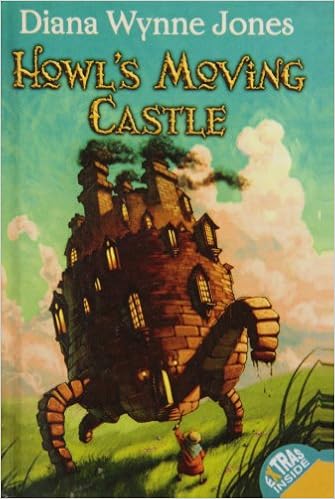
image courtesy of amazon.ca

I view my childhood through a romantic and nostalgic lens: a young, rebellious girl who’d rather run wild amongst trees and have her nose in a book than conform to expectations. I gravitated towards fantastical reads like Howl’s Moving Castle in order to escape my isolation of growing up in a mountainside valley. Books were and still are my escape. Discovering that childhood might be defined by adults, through a historical, cultural and societal lens (Frijhoff, 2012), made me pause. From the outside, this may be true. However, there is something to be said for hearing from authors who really don’t consider themselves writers of children’s books. Rather, they consider themselves writers who write books and some of those books happen to be enjoyed by children. Mourice Sendak is one of those authors who challenges my viewpoint on children’s books, which I always thought were just for children. Now, I realize that is such a narrow viewpoint to hold. What stories have I missed? What characters have remained strangers? What worlds have I not discovered?

As Mourice Sendak so graciously stated,  we still hold the same beliefs and fears as we did when we were children, so childhood never really ends. Not really. That notion seeped into my mind and rolled around throughout this entire course. I started to see children’s books as just books. Wonderful books. Funny books. Sad books. Fantastical books. It doesn’t sound too profound, but as a Secondary Teacher, it challenged me to explore books that aren’t a part of literary or classic canon.

LIBE 441 Reflective Bibliography copy

Context, Canon and Change

There are long-held thoughts regarding canon, Literature and the YA genre. These thoughts are like wearing blinders: you can see straight ahead, but not next or behind you.  The cultural context and  who the students are and how they live impacts the way they interact with any text. Relying on the Classics doesn’t create inclusivity, but rather it often creates narrowness and exclusion. Classics tend to focus on Eurocentric canon and dominant cultural narratives. The key is to take those blinders off, step away from traditional forms of storytelling and in doing so, students can find new ways to connect with world around them, without having to rely on literature from the past (Fassbender, 19-23). It’s been a long held standard that teachers use classics to teach literature. Literature is more than that. It has to be.

image courtesy of amazon.ca

Teacher-librarians must question and challenge the definition of Literature itself because it is more than just a list of books everyone ‘has to read’ in order to be considered literary. Literature must create empathy in the reader and provide levels of meaning in new ways that can reach the hearts and minds of the many, and not just few. SF Said believes “that books for young readers have the deepest impact of all. They’re the books that shape us and stay with us forever. Like ancient myths, they deal with the biggest questions: Who are we? Where do we come from? Where do we belong? How should we live?”

Literature can be Graphic Novels, Comics, Young Adult books and Mangas. Literature comes in all forms and formats. I have seen the positive impact Mangas like FairyTail have on students. Reluctant readers who will sign out 20 or more volumes and consume and analyze every single page, gaining empathy and insight through the imagery. All forms and formats have the capacity to use language and pictures to create intricate plots, dynamic characters, whimsical and realistic events and actions, all in intricate ways that mean something to those who read them. Ways that connect and make them consider something they never thought possible.

Connections and Considerations

I’ve connected canon and cultural context with diversity and representation. It’s about asking questions about the context of a book, how the audience will interact with that book from their own personal context, and what the content is actually about. Does it perpetuate negative stereotypes? Long held Eurocentric narratives? Who does it represent and whom is it written for? Who wrote it and why? It is about finding authentic authors who represent their respective cultures?
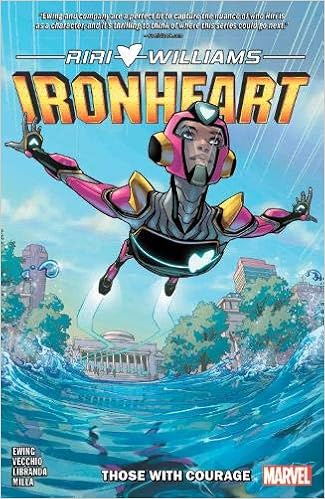
image courtesy of amazon.ca

It isn’t enough to say, “Diverse books are important.” That’s a given. I need to dig deeper and search for books written by diverse authors who represent their culture and experiences. I need to house more Indigenous picture books, children’s books, YA and adult books written by Indigenous authors who can provide authentic voices. Instead of relying on previously recommended books that may house harmful and stereotypical views on said culture, I want to have a variety of diverse selections so students will be able to recognize themselves in the traditional Western Literary Canon (Wilste, 23).
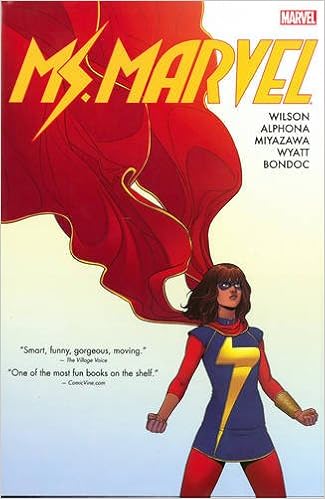
Image courtesy of amazon.ca

One way to do this is to offer  lessons that reflect different ways to interact with the content through multimodal responses of learning (Leland et al. 127). Creating opportunities for students to interact with the content in a meaningful way and transform what they have read into something new, whether through dance, art, and fan fiction, to create personal meaning. Diversity has propelled mainstream comics, like Marvel to create diverse characters like Riri Williams in Invincible Ironman: Ironheart and Kamala Khan in Ms. Marvel.  As a Teacher-librarian I need to showcase these changes.

This connects with everything Rudine Sims Bishop talks about in her essay, “Mirrors, Windows, and Sliding Glass Doors.” Bishop states that “when children cannot find themselves reflected in the books they read, or when the images they see are distorted, negative, or laughable, they learn a powerful lesson on how they are devalued in the society of which they are a part.” It’s a holistic approach to diversity where those in the dominate culture, who do not have to look too far to find their own reflection in a book, can and will benefit just as much as those who need and deserve equal representation.

Diversity is the Sliding Door Towards Empathy

Bishop’s words are rooted in the very power of what books can be. Books have the greatest capacity to teach its reader empathy.  The reason why diverse authors and diverse books are important is because if we only read books that are reflections of ourselves, then we will not learn that there are people who do not live, think, or believe like we do. Representation in books matter not just for those who deserve representation, but for those who already have it and need to learn that the world doesn’t revolve around their narratives and beliefs.

This slideshow requires JavaScript.

One goal a Teacher-Librarian should hold in high regard is creating a Learning Commons where students feel welcomed, safe and seen. To be truly seen and accepted is one of the truest gifts you can give a student. With each book I have discovered and read, I challenged myself not to see my reflection by making sure each book, comic, graphic novel, Manga is not a reflection of myself. Instead, I need to start viewing all my reading choices as if they are windows and sliding doors. One way to do this is to question my own privilege and beliefs. To challenge them. To learn from them. To read and recommend books that explore immigration, race, sexual identity, gender stereotypes, social constructs, differing cultures, beliefs, mythology, history and backgrounds. There are so many stories out there. The process of eliminating my own blinders has been rather liberating.

libe-441-reflective-bibliography-copy-2.png

Having worked in Secondary Schools, I was always annoyed when the English teacher would leave a lesson plan that would require the TTOC to read aloud to the class. Utter and complete dread spread over my body knowing that I would loose my voice by the end of the day and then I would have to take a day off for it to recover. But this course offered me a chance to challenge my held beliefs. The importance of reading aloud so students can hear the story in a new way and strengthen their own language skills. I always felt it was a sort of punishment, but as a child my mother read to me every night. Where would I be without that? And what if Secondary students never had that chance in their home life or in Elementary School?

Moving forward, I will try to incorporate more Audio Books  in my Learning Commons, so students who struggle with reading can have that extra support, and for teachers who aren’t great orators and dramatists can get a bit of a vocal break. Furthermore, it is just as important to connect the book with the author and incorporate their inspiring stories within lessons, to give context and an authentic voice to the story. Hearing Rukhsana Khan read her book The Roses in My Carpet has far more power and impact than if I read it aloud. It is her story to tell and it is important to give her space to tell it.

And Finally….

With the help of #IMWAYR weekly posts, the modules, browsing through my local library, and asking the public Librarians, I discovered books I wouldn’t have considered before and in the process discovered the lives of others, our differences and our similarities. What a gift to have been given every week. I hope to give that back to my future students.

All I could ever ask of a course is to teach me something, to create opportunities for me to learn and to help me grow as a person. The resources listed below did more than that. They will enable me to be a better Teacher-Librarian on a wide path, looking both to the left and right, behind and ahead, with my blinders off.

LIBE 441 Reflective BibliographyQuote

Bibliography

Articles

Bishop, R. (1990) The Ohio State University. “Mirrors, Windows and Sliding Glass Doors” originally appeared in Perspectives: Choosing and Using Books for the Classroom, vol. 6, no.3, Summer.

Fassbender, W. J., Dulaney, M., Pope, C. A (2013). Graphic narratives and the evolution of the canon: Adapting literature for a new generation. Voices from the Middle, 21(1), 19.

Frijhoff, W. “Historian’s Discovery of Childhood.” Paedagogica HIstorica. 48(1), 11-29. 2012.

Leland, C., Lewison, M., & Harste, J. (2012). Multimodal responses to literature. In Teaching children’s literature: It’s critical. Taylor andFrancis, p. 125-236.

Said, SF. “Can Children’s Books Help Build a Better World?” The Guardian, Guardian News and Media, 29 Sept. 2015, http://www.theguardian.com/childrens-books-site/2015/sep/29/childrens-books-build-a-better-world-sf-said.

“Tech in the Classroom: Audible.com.” Tech in the Classroom: Audible.com | Education       World, http://www.educationworld.com/a_tech/tech-in-the-classroom/audible.shtml.

Wiltse, L. (2015). Mirrors and windows: Teaching and research reflections on canadian aboriginal children’s literature. Language and Literacy, 17(2), 22-n/a.

Discovered Books

Adeyemi, Tomi. Children of Blood and Bone. Henry Holt & Co, 2018.

Choi, Yangsook. The Name Jar. Zaner-Bloser, 2013.

Daniel, Danielle. Sometimes I Feel like a Fox. NNELS/VIRN, 2018.

Ewing, Eve. Libranda, Kevin. Ironheart Vol. 1: Those With Courage. Marvel. 23 July 2019.

Johnston, Aviaq, and Tim Mack. What’s My Superpower? Inhabit Media Inc., 2017.

Jordan-Fenton, Christy, et al. When I Was Eight. Annick Press, 2013.

King, Thomas. Eggenshwiler, Byron. Coyote Tales. Groundwood Books, 2017.

Lee, Stacey. Under a Painted Sky. Speak, an Imprint of Penguin Random House LLC, 2016.

Love, Jessica. Julian is a Mermaid. Walker Books Ltd, 2019.

Mashima, Hiro. Fairy Tale. Master’s Edition Vol. 1. Kodansha Comics. 10 November 2015.

O’Leary, Sara, and Qin Leng. A Family Is a Family Is a Family. Groundwood Books, 2018.

Pearlman, Robb. Kaban, Edna. Pink is For Boys. Running Press Kids, 2018.

Rauf, Onjali. The Boy at the Back of the Class. Hachette Children’s, 2018.

Wilson, G. Willow. Ms. Marvel Omnibus. Vol. 1 Marvel. 15 November 2016.

Wynne-Jones, Diana. Howl’s Moving Castle. Greenwillow Books, 2008.

Yang, Kelly. Front Desk. Arthur A. Levine Books, 2019.

Images

All book images are courtesy of amazon.ca.

Videos

Bishop, Rudine S.  “Mirrors, Windows and Sliding Doors.” Rockets, Reading. YouTube, YouTube, 30 Jan. 2015, http://www.youtube.com/watch?v=_AAu58SNSyc.

Khan, R. (2018). Rukhsana Khan The Roses in My Carpet, Words Aloud 2007, Canada. YouTube. https://www.youtube.com/watch?v=TXSZdb9pezs.

Sendak, Maurice. “Maurice Sendak on Being a Kid.” Blank, Blank on. YouTube, YouTube, 10 June 2013, http://www.youtube.com/watch?v=KvtgqJTVVhE.

Talks, TEDx. “Can A Children’s Book Change the World? | Linda Sue Park |     TEDxBeaconStreet.” YouTube, YouTube, 2 Dec. 2015, http://www.youtube.com/watch?time_continue=3&v=40xz0afCjnM.

Websites

“You’re Getting a Free Audiobook.” Audible.com, http://www.audible.ca/.

LIBE 477 Final Vision Project

Final Vision Project: A Cross-Curricular Coding Journey

For my Final Vision Project, I explored cross-curricular coding. I wanted to integrate coding into the B.C. curriculum, demonstrate why coding is an important skill to have, and why Computer Science is important to explore within the classroom. I chose grade 8 because in my district most of the Computer Science courses are for grades 11 and 12. As an English teacher, I have always wanted to branch out and discover new ways to tell a story. As a life-long learner, I have always wanted to explore coding. I find it fascinating. In many ways it is similar to learning a new language, in others, it is a series of puzzles that when put together in such a way something new happens. That’s exciting! I wanted to take that excitement and turn it into something.

After reading Will Richardson’s Why School?: How Education Must Change When Learning and Information Are Everywhere, I realized that my excitement could be channelled into a bridge between traditional schools and digital learning. Richardson’s question of why school? propelled me to finding an answer to that question. Why school? Well, because school can still be relevant if schools become agents for change. 

Vision & Purpose

Word Art

WordArt.com

I approached my Final Vision Project with the idea that to learn coding, one doesn’t need a classroom, only the will and time to do so. I had this lingering feeling that maybe if teachers could learn new skills separate from their subject area and tap into the changing digital and technological world, then a bridge could be formed between the now and the future, between teacher and student. I had to pause, talk to teachers in my district, and reflect on the fact that apprehension towards coding due to time constraints were real.

So how could I get teachers interested in trying coding in their English 8 classes? I tossed around a few ideas: a presentation, an infographic, even step-by-step video, but ultimately, a website that teachers in my district could use get an introduction to coding created the best option. The content of the website gave me fits and starts. At first I was doing too much, jumping far too down the line. I had pages of coding language with descriptions and pictures. I deleted all of that and focused. What was my purpose? To get teachers interested in coding in an English 8 Class. I focused on storytelling because that is a fundamental part of the B.C. 8 Curriculum and telling a story is universal.

Rationale & Artifact 

This slideshow requires JavaScript.

My rationale behind the artifact was to make things easy for teachers. They are so busy and if I provided a step-by-step approach, then maybe they would be more inclined to try something new like coding. I decided my artifact would be a website made with Wix.com: www.toteachalibrarian.wixsite.com. My technological speed bumps were finding a Wix theme/design I liked and that worked. Ultimately, I decided to just work from scratch without a fixed template. I was familiar with building websites, so it wasn’t difficult, just laborious. Wix.com does make it easy to choose a template or create your own. I love how it shows guide lines, how to size images to match others on the page, and how to add shapes and vector art.

The one problematic aspect about Wix.com was layering shapes and text boxes. I wanted a box border on my step-by-step sections, but if you place that over the text, then the links wouldn’t work. I had to place the text over the box shape. I should have known this was ordered layering like Photoshop, but sometimes learning curves hit you at the most inconvenient moments. Overall, Wix.com was easy to follow, far less time consuming that WordPress, which I use for my blog. Designing a website is a process. I wanted to make sure it was cohesive in design, with connecting elements and colours. Links, resources and information had to be presented clearly. I also wanted it to be functional, ensuring that all the links worked was tedious, but necessary.

Reflection & Journey

alphabet creativity cube letter

Photo by Pixabay on Pexels.com

My overall journey was an ebb and flow of frustration and excitement. As challenging as it was trying to find grade 8 level coding resources and the appropriate format for my artifact, the excitement over discovering Scratch and Minecraft, and how wonderful coding can be pushed most of my frustrations aside. The overall reflection I’m left with is that whether a teacher just has students try coding or if they jump right in an integrate it into their course and learn along with their students, there really is no downside. Learning ICT Skills and digital literacy can only create more opportunities, never hinder them. Students want to learn something that is part of their world, something that is relevant to their lives. Coding is part of their lives. I have learned that teachers want to branch out but they are so busy and work so hard that asking them to try something outside their course materials is challenging.

Key Learning & Future Connections

two people shaking hands

Photo by rawpixel.com on Pexels.com

I have learned to not over think my approach to coding. I have tried both Scratch and Minecraft and yes, they do take a bit of time to learn, but something challenging is usually worthwhile in the end.

I hope to introduce this website resource to the teacher-librarians in my district, so they could link it in their resources page on their websites. Also, I plan on sharing it with a few teachers I know, who have expressed interest. I hope to gain feedback from them, adjust the site as I need to and go from there. If anything, this process taught me that there is no final artifact or resource. I have to view it as something malleable and ever changing because that is what learning and education, inside and outside of the school, is all about.

_________

Final Vision Project Works Cited

Final Vision Blog Post #2

Creating Interest in Cross-Curricular Coding for Reluctant Teachers

The last couple of weeks the same questions kept rising up over and over again: How am I going to convince teachers that cross-curricular coding is worth the effort, when I’m having a hard time with it? I decided to reach out to the potential learners for my project, teachers, and ask if they every considered implementing coding in their classes. The response was overwhelmingly “no”, but a few said that they had thought about it, but they didn’t know where to start and they felt a bit overwhelmed by all the choices available.

I realized I was being too specific and starting out in the wrong place. I needed to think about my intended audience and not limit content to only grade 8. I’ve decided to go with an age-range instead. Most of resources I’ve collected are for grades 5-8.

alphabet creativity cube letter

Photo by Pixabay on Pexels.com

Teaching a Teacher

My vision for this project is to reach out to reluctant teachers and inspire them to try coding. My rationale is that if a teacher or teacher-librarian finds in fun and applicable to their English class, then they will be willing to put the time and energy into learning coding and teaching it.

Learning something new can be challenging and rewarding, but sometimes daunting and scary. Coding is a language. It takes time to learn a new language. It takes time.When I got back into coding, I felt a bit lost and wondered why I decided to get back into coding after so long. The reason was clear: I was having fun. Yes, it was hard and time consuming, but the giddiness over creating a website that I envisioned in my head for so long could not be ignored. That’s the key: making it personable and fun for the teachers and not just sticking to what I find interesting or fun.

I need to grab their interest straight away and draw them it to wanting more. I also have to consider the teachers in my district and the technology available. I know that this will be a new experience for the majority of the English teachers in my district. I’ve chatted with a few of them and they biggest takeaway was that if they were going to spend time learning coding and incorporating it into the classroom/curriculum, then it had to be a step-by-step guide, that is easily to learn from home and at school.

Back to the Basics: Unplugged and more Choices

First step? No computers at all. Start with Unplugged coding. The above example demonstrates what computer programmers are trying to do. They are telling the computer or game or animation what to do. If teachers don’t have a grasp of the basics, then asking them to teach it to their students would be exceedingly daunting. I remember when I started taking coding courses again this past year, and I how it felt like I was being thrown into an ocean and someone told me to swim without telling me which way. I still want my potential learners to swim, but they should get to choose the direction. Presenting them with options and how they might use them in class would be far more beneficial than just choosing one option and honing in on it. Some teachers are going to be drawn to Scratch, others Minecraft, and others just teaching the basics using Hour of Code or Code Academy.

A Choice Driven Artifact

silver laptop next to coffe cup smartphone and glasses

Photo by Monoar Rahman on Pexels.com

I know my artifact needs to provide choices. It needs to be easily accessible, presentable and available to read and share. The teacher should be able to learn at his or her chosen pace. They need to try a few choices and see which one works for them and their students. Ideally, this artifact should be able to be presented in a group setting and be learned individually at home.

My choices so far:

  • How-to-Guide in Google Docs (easily accessible and to use).
  • Info-graphic on where to start and move forward.
  • A website with all the information teacher would need to start their coding experience and would provide them with links and tools to start coding.

Maybe it will be a combination of all of these and then present it to teachers when convenient, or make it easily available to them via teacher-librarians. A website would be easier to manage and share and the resources would be in one place. With my rationale and learner considerations in place, I will try a few of these options and see which one works best.

________

“A Beginner’s Guide to Teaching Kids Coding (Even When You Don’t Know How to Code).” CodaKid, 11 Oct. 2017, codakid.com/a-beginners-guide-to-teaching-kids-coding-even-when-you-dont-know-how-to-code/.

“A Modern, Open Source Code Editor That Understands Web Design.” Brackets, brackets.io/.

Burke, David. “Professor Warns That Computer Coding in Classrooms May Not Pan out | CBC News.” CBCnews, CBC/Radio Canada, 29 Aug. 2016, http://www.cbc.ca/news/canada/nova-scotia/coding-teachers-schools-1.3740004.

Coles, Terri. “Newfoundland Teachers Learn Coding – and What It Could Mean for the next Generation | CBC News.” CBCnews, CBC/Radio Canada, 22 July 2018, http://www.cbc.ca/news/canada/newfoundland-labrador/coding-teachers-classroom-create-code-teach-1.4751366.

Comisar, Shannon. “Unplugged Coding Activity.” YouTube, YouTube, 1 Dec. 2016, http://www.youtube.com/watch?v=p89b0RFQcTY.

“Computer Sciencewithout a Computer.” CS Unplugged, csunplugged.org/en/.

Cummings, Nancy, et al. “Codesters.” Codesters, http://www.codesters.com/?lang=en.

Diracles, Alexandra. “Coding in the Classroom: 6 Tips to Get Even Reluctant Teachers-and Students-Started – EdSurge News.” EdSurge, EdSurge, 27 Dec. 2018, http://www.edsurge.com/news/2017-01-17-coding-in-the-classroom-six-tips-to-get-even-reluctant-teachers-and-students-started.

“Educators.” Scratch, scratch.mit.edu/educators.

“Homepage | Minecraft: Education Edition.” Minecraft, education.minecraft.net/.

“Teaching Code.” Canada Learning Code, http://www.canadalearningcode.ca/teaching-code/.

Final Vision Blog Post #1

Beginning Steps to Cross-Curricular Coding in English 8

Word Art

Word Art

I’ve been researching cross-curricular coding since LIBE 477 has started. My rationale for this exploration and for the implementation of this topic is that coding is a 21st century classroom skill that needs to be learned in schools. My goal is to expose teachers and students to coding in a gradual way,  so it will open more doors for not only teachers and their curriculum, but also help students get a taste of Computer Science as a field of study.

Scope, Focus & Audience

  1. Scope: cross-curriculum coding and grade 8 English.
  2. Focus: Visual representation storytelling using Scratch or Minecraft or even website coding basics.
  3. Audience: Will be teachers and teacher-librarians because they will have to use and learn first before introducing it into the classroom. Ideally, once teachers are on board, then it would be the task of making the curriculum interesting enough for grade 8 English students.

My district has just started to push for coding in high schools. There are some robotics lessons and some higher grade Computer Science courses, but otherwise coding is still largely underrepresented. Incorporating coding in an English 8 classroom is a great starting point since my background is in English and History (so Humanities 8 class would work as well). Like English, coding has a unique language and learning any language takes time. So how do I present the content is such a way that will be easy for teachers and teacher-librarians to try and learn, but also make it transferable and enjoyable for Grade 8’s? That is something that is still rolling around in my mind, hoping to find an answer.

Needs, Format, and Potential Problems

Needs: the biggest upside is that cross-curriculum coding meets the needs of the B.C.  Curriculum for English Language Arts 8 and some of the Core Competencies. Students will be creating their own stories and then creating a visual medium with coding. It will be shared with the class and presented.

Format: how to represent this visual medium is still a bit of sticking point. One option is a very basic. Students would create a website all on their own. They would incorporate pictures or art along with the story. This option does not allow for the best interaction between students and the activity. Two other options would be to use coding programs such as Scratch and Minecraft to transform their stories and create new worlds.

Potential Problems: it’s time consuming to learn something new, something that the benefits of might not be seen right away. How can I convince teachers to branch out into coding? This is something that I keep turning over in my mind. Hopefully something will tumble out and help me decide. Another potential problem would be deciding what to code. Will it be a story? A fractured Fairy tale? A world for game? Poetry? Maybe having all those options would be best, so the students and teacher can choose.

What’s Next?

I need to actually create a Scratch story or a Minecraft one using the tutorials on their websites.  I need to see how much effort it will take to learn and share this. If I’m not willing to put in the time and effort, then why would I expect someone else to?

Works Cited

LIBE 477 Inquiry Blog #5

Takeaways from Inquiry Phase 2

woman drawing colorful circles

Photo by rawpixel.com on Pexels.com

There are three key takeaways that I have learned throughout this inquiry process:

  • Lack of technology will hinder, but not stop ICT Skill development
  • Collaboration with teachers will be challenging and rewarding
  • Technology in developing countries can also help rural communities

I have learned that there is a definite lack of new technology in my district. Smart boards are scarce. Most classrooms only have whiteboards or chalkboards. Not every classroom has a projector/screen. Every high school school has a computer lab, but the demand for it creates tension among teachers and students. However, I’ve discovered that both teachers and teacher-librarians strive to use what they do have to the best of their abilities.  Some TL’s have taken it upon themselves to teach coding and robotics. They invite teachers and their students down to the learning commons for a session. Other TL’s hold mini-seminars to show teachers how to use a smart board or even create a website. ICT skills are emerging (albeit slowly), but progress has been made.

two people shaking hands

Photo by rawpixel.com on Pexels.com

The second takeaway is that collaboration is great in theory and in practice, if teachers are willing and there is enough time to do so. Collaboration with teachers is going to be challenging because, as with students, every teacher will have different needs. Some will want to work with you and will enjoy the process. Others will treat the Learning Commons and the TL as a resource only when needed. Other teachers will not want to work with TL’s at all. It is important not to dwell on who won’t work with a TL and focus on who will (and maybe, in time, other teachers will come around).

The final take away was how much technology can impact developing nations and how similar technology can be applied to rural communities in Canada. Learning about the Kio kit and the impact it has in Kenya, helped frame the idea that the same sort of technological outreach should be applied to rural communities in British Columbia and across Canada, where the lack of internet connection and broadband infrastructure means that some communities are being left behind.  There is no reason why products similar to Kio kits, with a remote link couldn’t be used in rural communities.

Resonating projects and Learning from Others

woman wearing red and black checkered blouse using macbook

Photo by Christina Morillo on Pexels.com

The digital break out game resonated with me the most because I had personal experience with it and it is fun. I’m not really connecting with learning if I’m not enjoying what I’m learning about. I like the idea of a digital breakout because students can use their phones, work collaboratively, and learning how to work in a mildly competitive environment (where ‘winning’ is not based on a grade or a hierarchy). I’ve seen the look of excitement and accomplishment after students have completed a breakout game and believe breakout games (both digital and physical) have great potential for TTOC’s as well. Having one handy when a teacher doesn’t leave a lesson plan would be extremely helpful.

Two blog posts from other teacher-librarian/teachers/educators that have stuck in my mind involve inquiring into the impact of culturally relevant reading material and literacy in developing nations.  After reading both Sonya Neilson and Pam Spiers’ blog posts, I realized that having culturally relevant books are important to engage readers about their own culture, history and lives. E-readers would be beneficial in promoting more books that are culturally significant to its readers.  As teacher-librarians, it is of vital importance that voices from all backgrounds and cultures are heard and represented.

Moving Forward

pink teal yellow multi color please leave nothing but your feet road signage

Photo by Pixabay on Pexels.com

Moving forward, I’m going to try and follow in the footsteps of my fellow Teacher-librarians in my district, but also make my own path. This inquiry process helped me identify my skill set which I intend to bring to both Learning Commons and collaborative settings. I can code a website and I would love to bring that skill set to my district and see if some of the learning common websites can be update and be more interactive. I would also love to learn more about how I can utilize the current technology in my district while advocating for more.


______

Works Cited

Neilson, Sonya. “Sonya’s Teaching Blog.” LIBE 477 Inquiry 4: Bringing Libraries to the World, svneilson.blogspot.com/2019/02/libe-477-inquiry-4-globalization-of.html

Spiers, Pam. “LIBE 477B – Inquiry Project #1: Culturally Relevant Material to Spark Interest in Reading.” How To Train Your Teacher Librarian, 31 Jan. 2019, httytl.wordpress.com/2019/01/31/libe-477b-inquiry-project-1-culturally-relevant-material-to-spark-interest-in-reading/.

Inquiry Project Blog #2

Learning ICT Skills One Piece at a Time

A Missing Piece

In my local district, social media networking is sporadic and underused. One school uses Moodle to share lesson and class assignments. Though, not all teachers are on it. Some teachers use Weebly to create their own websites, but most haven’t been update in over a year. Every school has a twitter account with a small, yet mighty, following. I’ve talked with a few Teacher-Librarians as to why there is such a small showing of social media networking at their schools. Their answer? Time constraints.

Social media takes time. Advertising on any social media platform takes time. With the day-to-day tasks and responsibilities of teachers, both inside and outside of school, it is hard to find the extra time to create a social media platform.  Social networking is still done by face-to-face interaction. Although, digging deeper, I found that some teachers like a brisk email. Others like a quick text. Others like having a website. Some stick to their well crafted lesson plan binder that they follow year after year and that is their cup of tea. So I don’t know how I am going to network in my district as a whole, but I’m determined to find a way that suits whatever school I’m at, and, more importantly, find a way that suits me.

A Post-Secondary Piece

men s blue and gray suit jackets

Photo by rawpixel.com on Pexels.com

I have taken courses over the years and I’ve kept in touch with some of my professors. I like touching base with them to see what first year students struggle with (Writing and English are the main ones). This year I’m taking Computer Science and Web Design courses which has propelled my Inquiry Project for cross-curricular coding. I’ve gathered many resources from them. For example: I’m taking a coding class and I found out you can download Brackets for free and build a webpage. I’ve learned how to embed images and even how certain file extensions work for certain browsers. I will use this as a Teacher-Librarian because STEM programs are becoming more and more common in my district. I could eventually build a website for my won Learning Commons if I wanted to.  I can take these resources back to the schools in my district and share them.

A Personal Piece

five bulb lights

Photo by Rodolfo Clix on Pexels.com

I am willing to admit that I’m the odd one out when it comes to social media. I haven’t yet found a platform I enjoy. Pinterest, tumblr and Instagram are probably a little more my style than anything else, but I’ve only ever used them for personal use and not professional. So that is what I would like to explore beyond this course. I want to dig deeper into different social media platforms and see what will work best for me, my class or even my school.

Since networking in my district is more face-to-face, I want to explore what kind of apps and websites, like Google Classroom, are available that would make collaboration between TL’s and teachers better, to create more moments of collaboration between students and teachers without having to rely on in person interaction only. I want to further my education in coding and Web Design and help to reimagine Learning Common websites to better suit the ICT skills of the schools.

Overall, my ICT skills are growing and hopefully, by the end of this course, I will have more pieces added to my networking, developing and learning puzzle.

Work Cited