 I teach in Secondary Schools, so I didn’t know if a Children’s Lit course could offer me anything that I could use. I thought I would be stuck reading picture books. I’m happy to admit I was so very wrong. This bibliography consists of the greatest reflective learning moments I had during this course. First, I took a journey back into my childhood and discovered how childhood itself can be rather hard to define. Second, I slowly peeled away the blinders I had been wearing regarding canon, context, literature and diversity. Then I opened a bunch of sliding doors and entered into worlds I never thought to explore. Finally, I looked to the future where reading aloud isn’t just for children and that authors provide much needed authenticity and narrative, giving their books added context and voice.
Defining Childhood
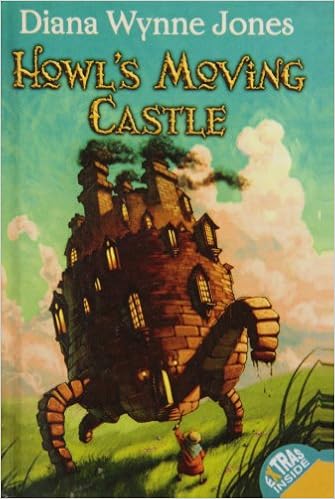
image courtesy of amazon.ca
I view my childhood through a romantic and nostalgic lens: a young, rebellious girl who’d rather run wild amongst trees and have her nose in a book than conform to expectations. I gravitated towards fantastical reads like Howl’s Moving Castle in order to escape my isolation of growing up in a mountainside valley. Books were and still are my escape. Discovering that childhood might be defined by adults, through a historical, cultural and societal lens (Frijhoff, 2012), made me pause. From the outside, this may be true. However, there is something to be said for hearing from authors who really don’t consider themselves writers of children’s books. Rather, they consider themselves writers who write books and some of those books happen to be enjoyed by children. Mourice Sendak is one of those authors who challenges my viewpoint on children’s books, which I always thought were just for children. Now, I realize that is such a narrow viewpoint to hold. What stories have I missed? What characters have remained strangers? What worlds have I not discovered?
As Mourice Sendak so graciously stated, we still hold the same beliefs and fears as we did when we were children, so childhood never really ends. Not really. That notion seeped into my mind and rolled around throughout this entire course. I started to see children’s books as just books. Wonderful books. Funny books. Sad books. Fantastical books. It doesn’t sound too profound, but as a Secondary Teacher, it challenged me to explore books that aren’t a part of literary or classic canon.

Context, Canon and Change
There are long-held thoughts regarding canon, Literature and the YA genre. These thoughts are like wearing blinders: you can see straight ahead, but not next or behind you. The cultural context and who the students are and how they live impacts the way they interact with any text. Relying on the Classics doesn’t create inclusivity, but rather it often creates narrowness and exclusion. Classics tend to focus on Eurocentric canon and dominant cultural narratives. The key is to take those blinders off, step away from traditional forms of storytelling and in doing so, students can find new ways to connect with world around them, without having to rely on literature from the past (Fassbender, 19-23). It’s been a long held standard that teachers use classics to teach literature. Literature is more than that. It has to be.

image courtesy of amazon.ca
Teacher-librarians must question and challenge the definition of Literature itself because it is more than just a list of books everyone ‘has to read’ in order to be considered literary. Literature must create empathy in the reader and provide levels of meaning in new ways that can reach the hearts and minds of the many, and not just few. SF Said believes “that books for young readers have the deepest impact of all. They’re the books that shape us and stay with us forever. Like ancient myths, they deal with the biggest questions: Who are we? Where do we come from? Where do we belong? How should we live?”
Literature can be Graphic Novels, Comics, Young Adult books and Mangas. Literature comes in all forms and formats. I have seen the positive impact Mangas like FairyTail have on students. Reluctant readers who will sign out 20 or more volumes and consume and analyze every single page, gaining empathy and insight through the imagery. All forms and formats have the capacity to use language and pictures to create intricate plots, dynamic characters, whimsical and realistic events and actions, all in intricate ways that mean something to those who read them. Ways that connect and make them consider something they never thought possible.
Connections and Considerations
I’ve connected canon and cultural context with diversity and representation. It’s about asking questions about the context of a book, how the audience will interact with that book from their own personal context, and what the content is actually about. Does it perpetuate negative stereotypes? Long held Eurocentric narratives? Who does it represent and whom is it written for? Who wrote it and why? It is about finding authentic authors who represent their respective cultures?
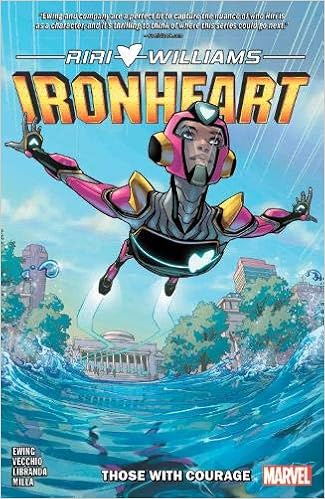
image courtesy of amazon.ca
It isn’t enough to say, “Diverse books are important.” That’s a given. I need to dig deeper and search for books written by diverse authors who represent their culture and experiences. I need to house more Indigenous picture books, children’s books, YA and adult books written by Indigenous authors who can provide authentic voices. Instead of relying on previously recommended books that may house harmful and stereotypical views on said culture, I want to have a variety of diverse selections so students will be able to recognize themselves in the traditional Western Literary Canon (Wilste, 23).
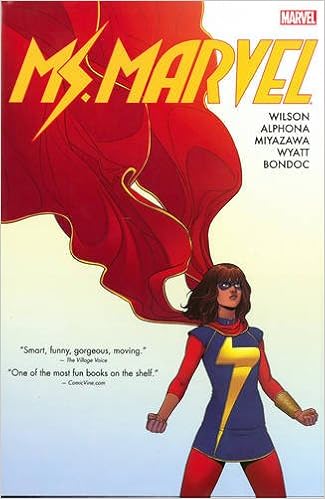
Image courtesy of amazon.ca
One way to do this is to offer lessons that reflect different ways to interact with the content through multimodal responses of learning (Leland et al. 127). Creating opportunities for students to interact with the content in a meaningful way and transform what they have read into something new, whether through dance, art, and fan fiction, to create personal meaning. Diversity has propelled mainstream comics, like Marvel to create diverse characters like Riri Williams in Invincible Ironman: Ironheart and Kamala Khan in Ms. Marvel. As a Teacher-librarian I need to showcase these changes.
This connects with everything Rudine Sims Bishop talks about in her essay, “Mirrors, Windows, and Sliding Glass Doors.” Bishop states that “when children cannot find themselves reflected in the books they read, or when the images they see are distorted, negative, or laughable, they learn a powerful lesson on how they are devalued in the society of which they are a part.” It’s a holistic approach to diversity where those in the dominate culture, who do not have to look too far to find their own reflection in a book, can and will benefit just as much as those who need and deserve equal representation.
Diversity is the Sliding Door Towards Empathy
Bishop’s words are rooted in the very power of what books can be. Books have the greatest capacity to teach its reader empathy. The reason why diverse authors and diverse books are important is because if we only read books that are reflections of ourselves, then we will not learn that there are people who do not live, think, or believe like we do. Representation in books matter not just for those who deserve representation, but for those who already have it and need to learn that the world doesn’t revolve around their narratives and beliefs.
One goal a Teacher-Librarian should hold in high regard is creating a Learning Commons where students feel welcomed, safe and seen. To be truly seen and accepted is one of the truest gifts you can give a student. With each book I have discovered and read, I challenged myself not to see my reflection by making sure each book, comic, graphic novel, Manga is not a reflection of myself. Instead, I need to start viewing all my reading choices as if they are windows and sliding doors. One way to do this is to question my own privilege and beliefs. To challenge them. To learn from them. To read and recommend books that explore immigration, race, sexual identity, gender stereotypes, social constructs, differing cultures, beliefs, mythology, history and backgrounds. There are so many stories out there. The process of eliminating my own blinders has been rather liberating.

Having worked in Secondary Schools, I was always annoyed when the English teacher would leave a lesson plan that would require the TTOC to read aloud to the class. Utter and complete dread spread over my body knowing that I would loose my voice by the end of the day and then I would have to take a day off for it to recover. But this course offered me a chance to challenge my held beliefs. The importance of reading aloud so students can hear the story in a new way and strengthen their own language skills. I always felt it was a sort of punishment, but as a child my mother read to me every night. Where would I be without that? And what if Secondary students never had that chance in their home life or in Elementary School?
Moving forward, I will try to incorporate more Audio Books in my Learning Commons, so students who struggle with reading can have that extra support, and for teachers who aren’t great orators and dramatists can get a bit of a vocal break. Furthermore, it is just as important to connect the book with the author and incorporate their inspiring stories within lessons, to give context and an authentic voice to the story. Hearing Rukhsana Khan read her book The Roses in My Carpet has far more power and impact than if I read it aloud. It is her story to tell and it is important to give her space to tell it.
And Finally….
With the help of #IMWAYR weekly posts, the modules, browsing through my local library, and asking the public Librarians, I discovered books I wouldn’t have considered before and in the process discovered the lives of others, our differences and our similarities. What a gift to have been given every week. I hope to give that back to my future students.
All I could ever ask of a course is to teach me something, to create opportunities for me to learn and to help me grow as a person. The resources listed below did more than that. They will enable me to be a better Teacher-Librarian on a wide path, looking both to the left and right, behind and ahead, with my blinders off.

Bibliography
Articles
Bishop, R. (1990) The Ohio State University. “Mirrors, Windows and Sliding Glass Doors” originally appeared in Perspectives: Choosing and Using Books for the Classroom, vol. 6, no.3, Summer.
Fassbender, W. J., Dulaney, M., Pope, C. A (2013). Graphic narratives and the evolution of the canon: Adapting literature for a new generation. Voices from the Middle, 21(1), 19.
Frijhoff, W. “Historian’s Discovery of Childhood.” Paedagogica HIstorica. 48(1), 11-29. 2012.
Leland, C., Lewison, M., & Harste, J. (2012). Multimodal responses to literature. In Teaching children’s literature: It’s critical. Taylor andFrancis, p. 125-236.
Said, SF. “Can Children’s Books Help Build a Better World?” The Guardian, Guardian News and Media, 29 Sept. 2015, http://www.theguardian.com/childrens-books-site/2015/sep/29/childrens-books-build-a-better-world-sf-said.
“Tech in the Classroom: Audible.com.” Tech in the Classroom: Audible.com | Education World, http://www.educationworld.com/a_tech/tech-in-the-classroom/audible.shtml.
Wiltse, L. (2015). Mirrors and windows: Teaching and research reflections on canadian aboriginal children’s literature. Language and Literacy, 17(2), 22-n/a.
Discovered Books
Adeyemi, Tomi. Children of Blood and Bone. Henry Holt & Co, 2018.
Choi, Yangsook. The Name Jar. Zaner-Bloser, 2013.
Daniel, Danielle. Sometimes I Feel like a Fox. NNELS/VIRN, 2018.
Ewing, Eve. Libranda, Kevin. Ironheart Vol. 1: Those With Courage. Marvel. 23 July 2019.
Johnston, Aviaq, and Tim Mack. What’s My Superpower? Inhabit Media Inc., 2017.
Jordan-Fenton, Christy, et al. When I Was Eight. Annick Press, 2013.
King, Thomas. Eggenshwiler, Byron. Coyote Tales. Groundwood Books, 2017.
Lee, Stacey. Under a Painted Sky. Speak, an Imprint of Penguin Random House LLC, 2016.
Love, Jessica. Julian is a Mermaid. Walker Books Ltd, 2019.
Mashima, Hiro. Fairy Tale. Master’s Edition Vol. 1. Kodansha Comics. 10 November 2015.
O’Leary, Sara, and Qin Leng. A Family Is a Family Is a Family. Groundwood Books, 2018.
Pearlman, Robb. Kaban, Edna. Pink is For Boys. Running Press Kids, 2018.
Rauf, Onjali. The Boy at the Back of the Class. Hachette Children’s, 2018.
Wilson, G. Willow. Ms. Marvel Omnibus. Vol. 1 Marvel. 15 November 2016.
Wynne-Jones, Diana. Howl’s Moving Castle. Greenwillow Books, 2008.
Yang, Kelly. Front Desk. Arthur A. Levine Books, 2019.
Images
All book images are courtesy of amazon.ca.
Videos
Bishop, Rudine S. “Mirrors, Windows and Sliding Doors.” Rockets, Reading. YouTube, YouTube, 30 Jan. 2015, http://www.youtube.com/watch?v=_AAu58SNSyc.
Khan, R. (2018). Rukhsana Khan The Roses in My Carpet, Words Aloud 2007, Canada. YouTube. https://www.youtube.com/watch?v=TXSZdb9pezs.
Sendak, Maurice. “Maurice Sendak on Being a Kid.” Blank, Blank on. YouTube, YouTube, 10 June 2013, http://www.youtube.com/watch?v=KvtgqJTVVhE.
Talks, TEDx. “Can A Children’s Book Change the World? | Linda Sue Park | TEDxBeaconStreet.” YouTube, YouTube, 2 Dec. 2015, http://www.youtube.com/watch?time_continue=3&v=40xz0afCjnM.
Websites
“You’re Getting a Free Audiobook.” Audible.com, http://www.audible.ca/.
 To Teach a Librarian